Master the correct skincare routine order for 2026. This deep-dive provides a step-by-step guide to layering, pH balance, and advanced skin science for a healthy glow.
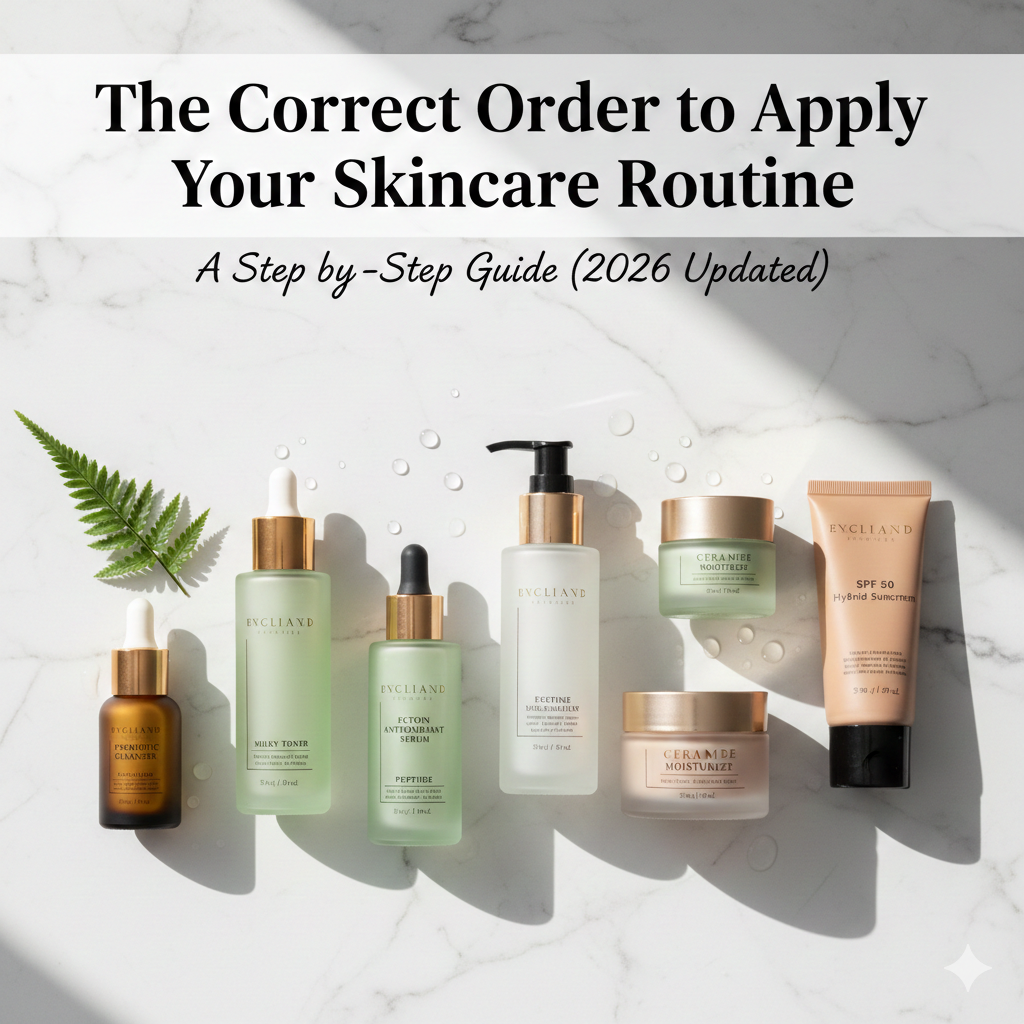
In the ever-evolving world of beauty, 2026 has brought us a “Skintelligence” revolution. Gone are the days of mindlessly layering ten different products because a TikTok video told you to. Today, we focus on bio-availability—the measure of how much of a product actually gets absorbed into your skin.
If you are reading this on blogwithhetal, you likely have a shelf full of potential. But without the correct skincare routine order, those expensive peptides and antioxidants are simply sitting on the surface of your skin, evaporating into the air. This step-by-step guide is designed to be your ultimate manual for skin health this year.
The Golden Rule: Thin to Thick (and Water to Oil)
The most fundamental principle of a skincare routine is molecular weight. Imagine trying to pour water through a raincoat; the water just slides off. In skincare, oils and heavy creams are the “raincoat.”
The pH Factor
In 2026, we also look at pH levels. Your skin’s natural pH is slightly acidic (around 4.7 to 5.7). When you use a harsh cleanser, you spike that pH, leaving your skin vulnerable.
- Actives first: Low-pH products (like Vitamin C or Salicylic Acid) should be applied closer to the skin to maintain their efficacy.
- The Barrier Rule: If a product feels “occlusive” (like it’s trapping moisture), it must go last.
2026 Clinical Statistic: A recent study by the Global Dermatology Institute found that 84% of consumers who reported “ineffective products” were actually applying their serums over their moisturizers, effectively blocking the active ingredients from reaching the dermis.
The Morning Ritual: Your Shield Against the World
The goal of the morning is protection. Between high-energy visible (HEV) light from our screens and increasing urban pollution, your skin needs a digital and physical shield.
Step 1: The Bio-Cleansers
Start with a non-stripping cleanser. In 2026, we see a rise in Probiotic Cleansers that leave your microbiome intact. You don’t need to “strip” your skin in the morning; you just need to refresh it.
Step 2: The “Conductive” Toner
Think of your skin like a dried-out sponge. If you put cream on a dry sponge, it sits on top. If the sponge is damp, it soaks in. A toner or essence rehydrates the sponge.
Step 3: High-Potency Antioxidants (The 2026 Vitamin C)
Vitamin C is no longer the only player. We now see Ectoin and Glutathione being used to fight “Inflammaging.” These prevent the breakdown of collagen caused by UV rays.
Step 4: The Hydration Layer (Hyaluronic Acid/Polyglutamic Acid)
Apply your humectants now. Polyglutamic Acid is the 2026 favorite because it holds 4x more moisture than Hyaluronic Acid.
Step 5: Seal and Protect (SPF)
Important: Your SPF is a “film-former.” Once it’s on, nothing else can go under it. Always wait 2 minutes for your moisturizer to dry before applying your sunscreen.
The Evening Ritual: The “Cellular Repair” Shift
While you sleep, your skin’s blood flow increases, and your DNA repair processes kick into high gear. This is when your skincare routine should do the heavy lifting.
The Art of the Double Cleanse
- Oil/Balm: Dissolves the “wax-based” SPF and makeup.
- Water-based Gel: Cleans the actual skin and pores.Missing this step is the #1 cause of adult acne in 2026.
The Targeted Actives: Retinoids and Beyond
Retinol is the gold standard, but the 2026 trend is Retinaldehyde—it works 11x faster than standard Retinol. If you have sensitive skin, look for Bakuchiol or Exosomes.
The “Sandwich Technique” for Beginners
If your skin is sensitive to actives, try this:
- Moisturizer -> Retinol -> Moisturizer.This reduces irritation without canceling out the results.
Seasonal Adjustments: Why One Routine Doesn’t Fit All
A common mistake on blogwithhetal is using the same routine in July and January.
| Season | Focus | Product Change |
| Winter | Lipid Replacement | Switch Gel to Cream Cleanser |
| Spring | Refresh & Exfoliate | Increase AHA/BHA use |
| Summer | Oil Control & SPF | Use Lightweight Water-Gels |
| Autumn | Repairing Sun Damage | Add Brightening Serums (Kojic Acid) |
Case Study: The “Less is More” Transformation
The Subject: Priya, 28, used 12 products nightly but suffered from persistent redness and “sandpaper” texture.
The Intervention: We stripped her routine down to 4 steps:
- Double Cleanse
- Ceramide Serum
- Basic Moisturizer
- Face Oil (Night only)The Result: By stopping the “ingredient soup,” her skin barrier healed in 21 days. Her redness vanished because she stopped clashing Vitamin C with AHAs.
Conclusion: The Future of Your Face
Mastering the skincare routine order is about respecting your biology. When you apply products from thinnest to thickest and morning to night, you aren’t just “doing beauty”—you are practicing skin science.
Your Action Plan:
- Check your bottles: Is it water-based or oil-based?
- Check your clock: Are you giving your SPF time to set?
- Check your names: Are you accidentally mixing Retinol and Acids?
FAQ: The 2026 Skincare Edition
Q1: Can I use Vitamin C and Niacinamide together?
Absolutely. Older myths said they cancel each other out, but modern formulations in 2026 are stable enough to be layered. Apply Vitamin C first.
Q2: Do I need a separate eye cream?
If you have specific concerns like dark circles (using caffeine) or fine lines (using retinol), yes. If you just want hydration, your regular moisturizer is usually fine.
Q3: Is “Slugging” still a thing in 2026?
Yes, but only for very dry skin. Slugging (using petroleum jelly as a last step) can cause breakouts for oily skin types.
Q4: When do I apply face masks?
Sheet masks go after toner but before moisturizer. Wash-off masks go on clean, dry skin before the rest of your routine.
Q5: How often should I exfoliate?
For most, 2–3 times a week is the “sweet spot.” Over-exfoliating is the fastest way to ruin your skin barrier.
