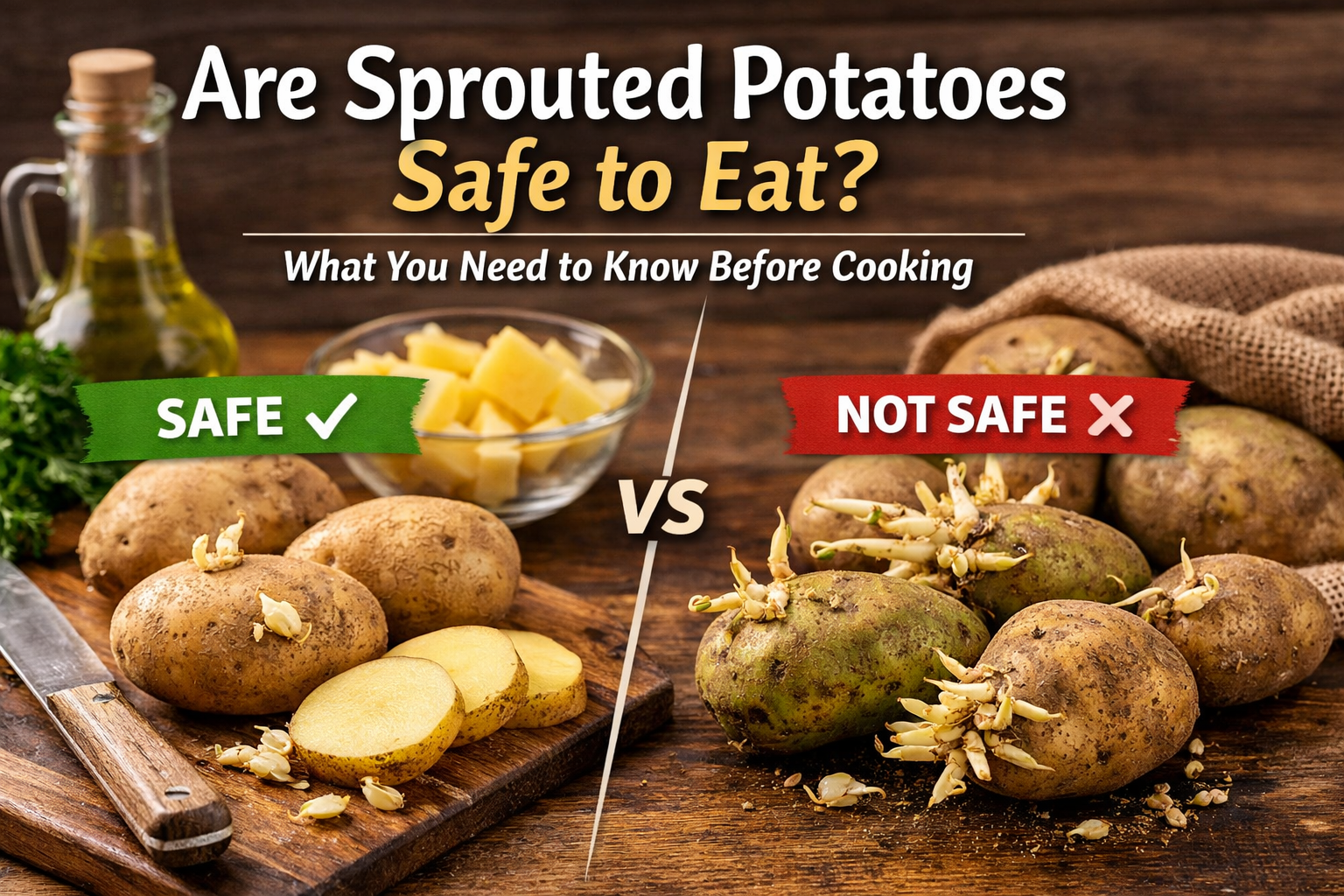
Are sprouted potatoes safe to eat? Learn risks, solanine facts, safety tips, and when to cook or throw them away before eating.
Potatoes are one of the most widely consumed staple foods in the world, found in almost every kitchen. However, many people often face a common dilemma: what should you do when potatoes start sprouting?
If you’ve ever opened your pantry and found potatoes covered in small sprouts, you’ve probably asked yourself:
👉 Are sprouted potatoes safe to eat?
This is an important question because sprouting changes the chemical composition of potatoes and can potentially affect their safety.
In this article, we will explore:
- Whether sprouted potatoes safe to eat or not
- The science behind potato sprouting
- Health risks and solanine toxicity
- When they are safe to cook
- How to store potatoes properly
- Real-life safety guidelines backed by food science
By the end, you’ll know exactly what to do the next time your potatoes start sprouting.
What Happens When Potatoes Start Sprouting?
Potatoes are living organisms even after harvest. When stored under the right conditions (warmth, light, and humidity), they begin to sprout in an attempt to grow into a new plant.
🌱 Why sprouting happens:
- Exposure to light triggers growth hormones
- Warm temperatures speed up sprouting
- Long storage time increases sprout formation
- Moisture encourages plant activation
During sprouting, potatoes produce compounds called glycoalkaloids, mainly:
- Solanine
- Chaconine
These compounds act as natural pesticides for the plant but can be harmful to humans in high amounts.
📊 Key Fact:
Studies show that glycoalkaloid levels in sprouted potatoes can increase by 30% to 250% depending on storage conditions.
Are Sprouted Potatoes Safe to Eat? Understanding the Risks
The biggest concern with sprouted potatoes is solanine toxicity.
⚠️ What is Solanine?
Solanine is a natural toxin found in potatoes that increases when:
- Potatoes turn green
- Sprouts grow longer
- Potatoes are exposed to light or damage
🧪 Health Risks of High Solanine Intake:
- Nausea and vomiting
- Diarrhea
- Headache
- Dizziness
- In severe cases, neurological symptoms
📊 Important Statistics:
Here are some food safety facts:
- Safe solanine level: < 20 mg per 100g of potato
- Toxic symptoms may appear at: 200–400 mg intake
- Severe poisoning cases are rare but documented in food safety reports
- Around 5–10% of stored household potatoes may begin sprouting if not used in time
- Improper storage increases sprouting risk by up to 70%
❗ So, Are Sprouted Potatoes Safe to Eat?
👉 Yes, but only under certain conditions.
Sprouted potatoes are usually safe if:
- Sprouts are small and few
- Potato is still firm
- No green coloration
- No bitter taste or smell
But they become unsafe when:
- Sprouts are long and multiple
- Potato skin turns green
- Potato is soft, wrinkled, or rotten
When You Can Safely Eat Sprouted Potatoes (Case Study Included)
Not all sprouted potatoes need to be thrown away. Many are still usable if handled correctly.
✔️ Safe Conditions Checklist:
You can still eat them if:
- Potato is firm and not shriveled
- Sprouts are less than 1–2 cm
- No green patches on skin
- No bitter smell or taste
🔪 How to make them safe:
- Remove all sprouts completely
- Peel the skin thoroughly
- Cut away any green parts
- Cook at high temperature (boiling, baking, frying)
📚 Case Study Example
A food safety study conducted in Europe examined household storage conditions of potatoes over 6 weeks.
Findings:
- Potatoes stored in dark, cool conditions showed only 10–15% sprouting rate
- Potatoes exposed to light had over 60% sprouting within the same period
- Proper peeling and cooking reduced glycoalkaloid levels by 30–50%
Conclusion from the study:
Sprouted potatoes can often be made safe through proper preparation, but severely sprouted or green potatoes should be discarded.
How to Store Potatoes to Prevent Sprouting
Prevention is always better than waste. Proper storage can significantly reduce sprouting.
🥔 Best storage practices:
- Keep potatoes in a cool, dark place
- Avoid plastic bags (use mesh or paper bags)
- Store away from onions (they speed up sprouting)
- Maintain ventilation to reduce moisture
- Avoid refrigeration (can affect taste and texture)
📊 Storage insight:
Proper storage can extend potato shelf life by 3–5 weeks longer compared to improper storage.
How to Cook Sprouted Potatoes Safely
If your potatoes are still safe, cooking them properly is essential.
🔥 Safe cooking methods:
- Boiling (best for reducing toxins)
- Baking at high heat
- Roasting in oven
- Making soups or stews
⚠️ Important cooking tips:
- Always peel before cooking
- Remove all sprouts
- Cut away green areas
- Do not consume raw sprouted potatoes
🍴 Why cooking matters:
High heat reduces some glycoalkaloids, making the potatoes safer for consumption.
Food Waste, Safety & Sustainability Impact
Sprouted potatoes contribute significantly to household food waste worldwide.
📊 Global food waste insights:
- Around 30–40% of food in developed countries is wasted annually
- Potatoes are among the top 10 most wasted vegetables
- Improper storage accounts for over 50% of potato waste at home
🌱 Sustainability angle:
Instead of throwing away mildly sprouted potatoes:
- Reuse them for cooking
- Plant them in gardens
- Compost unusable parts
Reducing waste not only saves money but also helps the environment.
Conclusion
So, are sprouted potatoes safe to eat?
👉 The answer depends on their condition.
Lightly sprouted, firm potatoes can be safely eaten after proper preparation. However, green, soft, or heavily sprouted potatoes should be avoided due to potential toxin buildup.
📢 Call-to-Action:
Next time you find sprouted potatoes in your kitchen, don’t rush to throw them away—check them carefully using the safety rules in this guide. And if you found this helpful, share it with others to help reduce food waste and improve kitchen safety.
❓ Frequently Asked Questions (FAQs)
1. Are sprouted potatoes safe to eat after removing sprouts?
Yes, if the potato is firm, not green, and properly peeled and cooked.
2. Can sprouted potatoes make you sick?
Yes, if they contain high levels of solanine due to long sprouting or greening.
3. What part of sprouted potatoes is toxic?
The sprouts, green skin, and sometimes the eyes contain higher toxin levels.
4. Can cooking remove toxins from sprouted potatoes?
Cooking reduces some toxins but does not completely remove solanine.
5. When should you throw away sprouted potatoes?
If they are soft, green, heavily sprouted, or smell bad, discard them.
