Learn how to breathe better when your chest feels tight from stress. Discover 3-minute somatic exercises and science-backed tips to release anxiety tension fast.
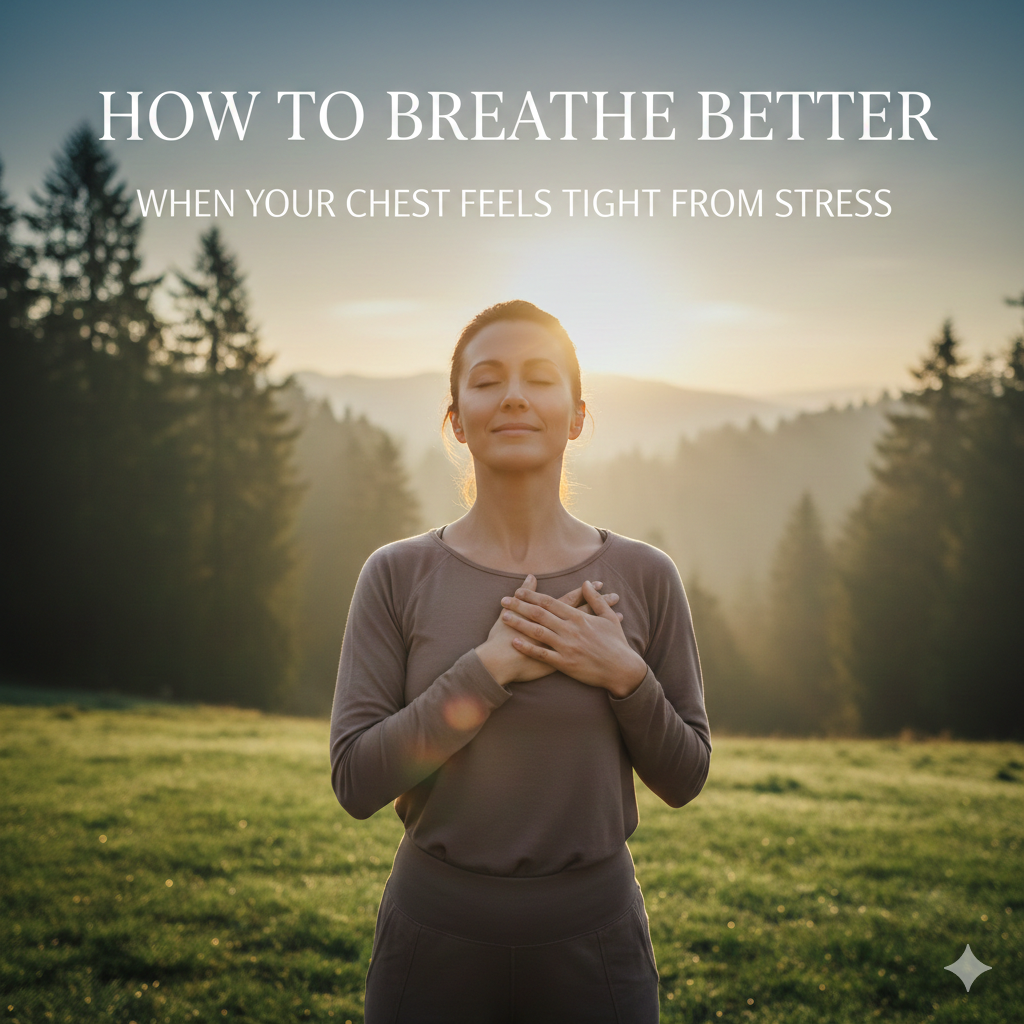
Have you ever felt like an invisible band was tightening around your ribs? Or perhaps it feels like you can’t quite take a “full” breath, no matter how hard you try? When your chest feels tight, your body is sending you a loud signal: your nervous system is stuck in “high alert” mode.
In this guide, we are going to explore exactly why this happens and, more importantly, how to breathe better using simple, 3-minute somatic techniques. We will move beyond basic “calm down” advice and look at how to physically reset your body so you can find the air you need.
Why Your Chest Feels Tight: The Science of Stress
When we experience stress, our “Fight or Flight” response kicks in. This triggers the release of cortisol and adrenaline. Physically, your muscles—especially the intercostals between your ribs and the diaphragm—contract to protect your vital organs.
- Statistic 1: According to recent wellness data, nearly 74% of adults report feeling so stressed they feel overwhelmed or unable to cope, often manifesting as physical chest pressure.
- Statistic 2: Research shows that “Chest Tightness” is the second most common physical symptom reported by people experiencing acute anxiety.
By understanding that this is a physical muscle contraction and not just “in your head,” you can begin to use physical tools to undo the knot.
The 3-Minute Reset: How to Breathe Better Right Now
To breathe better, we have to stop “fighting” for air and start relaxing the muscles that hold the air out. Try this 3-minute somatic sequence:
- The Chest Softener (1 Minute): Place both hands on your breastbone. Gently move your skin in small circles. Feel the warmth of your hands melting the tension in the muscle.
- The Physiological Sigh (1 Minute): Take a deep breath in through your nose, then at the very top, take one more tiny “sip” of air. Exhale very slowly through your mouth like you are blowing through a straw.
- The Rib Expansion (1 Minute): Place your hands on the sides of your waist. As you inhale, try to push your hands out sideways with your ribs, rather than lifting your shoulders up.
Somatic Exercises to Release “Stored” Anxiety
Sometimes the feeling that your chest feels tight is actually “frozen” energy in the nervous system. Somatic shaking is a powerful tool here.
- Step-by-Step Shaking:
- Stand with your feet shoulder-width apart.
- Start bouncing gently at the knees.
- Let your arms dangle like noodles.
- Let the shaking move up into your shoulders and chest.
- Make a soft “ahhh” sound as you exhale.
This tells your brain that the “danger” is over, allowing your respiratory muscles to finally soften.
Case Study: Sarah’s Journey from “Air Hunger” to Ease
The Problem: Sarah, a 34-year-old marketing manager, felt a constant “weight” on her chest during work hours. She tried deep breathing, but it made her feel more panicked because she couldn’t get a full breath.
The Solution: Sarah shifted from “Deep Breathing” to “Somatic Rib Release.” Instead of forcing air in, she focused on humming during her exhales to vibrate her chest cavity.
The Result: Within two weeks of practicing for 3 minutes twice a day, Sarah reported a 60% reduction in chest tension and felt she could finally breathe better during high-pressure meetings.
Long-Term Habits for a Relaxed Nervous System
To prevent that “tight” feeling from coming back, consider these daily habits:
- Morning Sunlight: Helps regulate cortisol so you don’t wake up with a racing heart.
- Magnesium-Rich Foods: Magnesium helps muscles (like those in your chest) relax.
- Vagus Nerve Toning: Simple acts like singing, humming, or gargling water stimulate the nerve that tells your body to relax.
Conclusion: Take Your Power Back
When your chest feels tight, it’s a sign to stop and listen to your body. You don’t need hours of meditation to feel better; you just need 3 minutes of focused, somatic movement. By learning to breathe better through rib expansion and muscle release, you are training your nervous system to stay calm even when life gets loud.
Call to Action: Try the 3-minute “Chest Softener” right now. How do you feel? Leave a comment below and share your favorite way to de-stress!
Frequently Asked Questions (FAQ)
- Why does my chest feel tight even when I’m not “worried”? Your body can store stress physically even if your mind feels quiet. This is often called “body memory” or a dysregulated nervous system.
- Can these exercises help with asthma? While these help relax stress-related tension, they do not replace medical inhalers. Always consult your doctor for respiratory conditions.
- How often should I do the 3-minute routine? Consistency is key! Doing it once in the morning and once before bed works best.
- Is it normal to feel emotional while doing somatic exercises? Yes. Releasing physical tension in the chest can sometimes release “trapped” emotions like crying or laughing.
- What if the tightness doesn’t go away? If chest pain is sharp, radiating, or accompanied by numbness, seek medical attention immediately to rule out heart issues.
