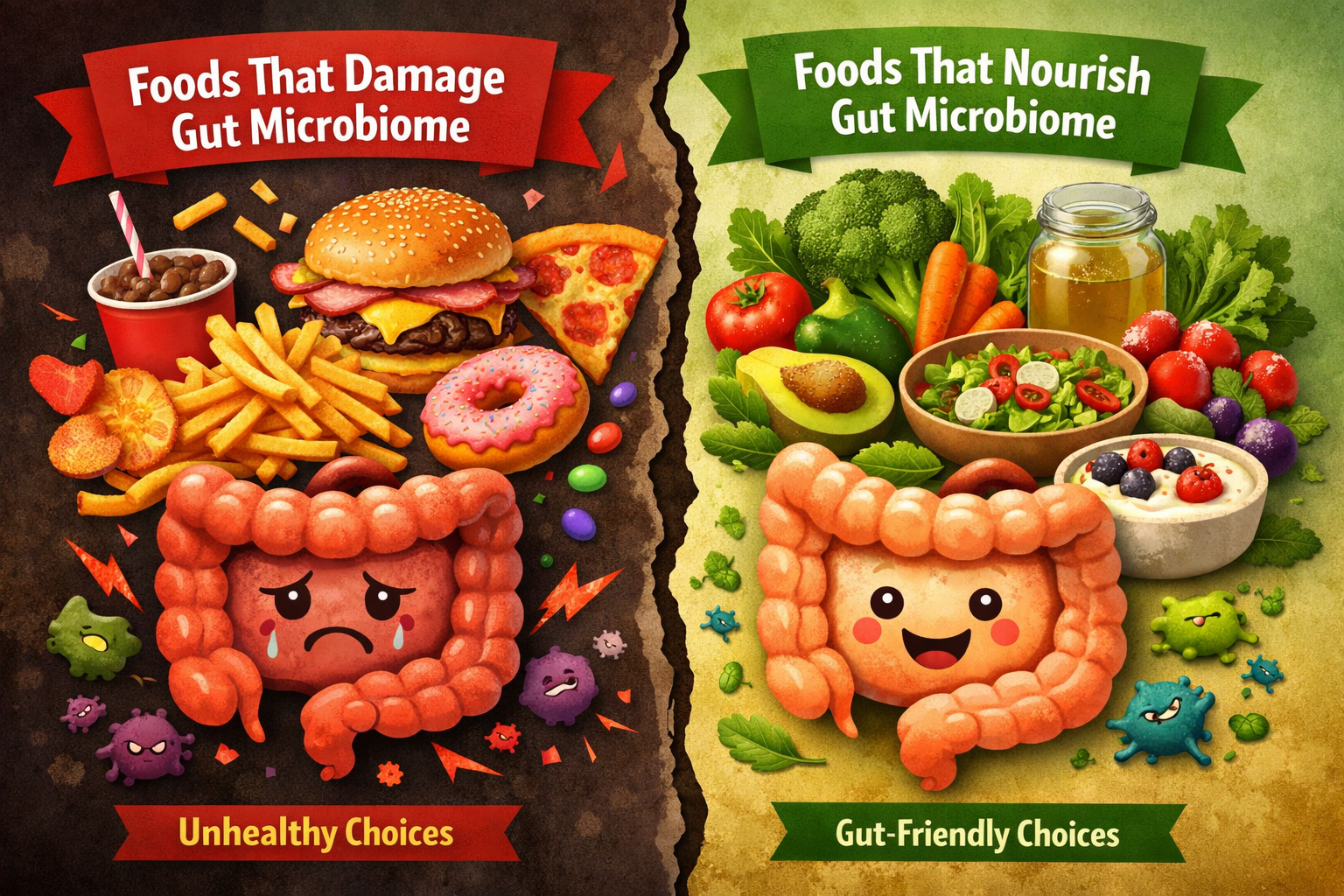
Discover foods that damage gut microbiome and learn healthier alternatives to protect your digestive health and overall well-being.
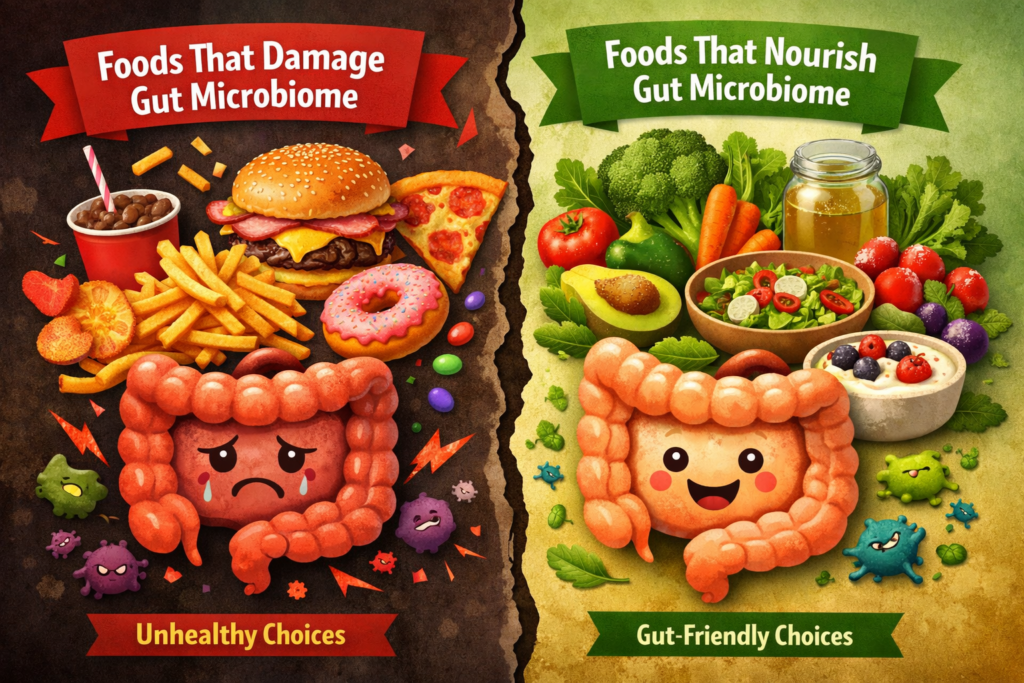
The human gut microbiome—a complex ecosystem of trillions of bacteria—plays a critical role in digestion, immunity, mental health, and even metabolism. However, the foods we consume daily can either nourish or disrupt this delicate balance. Certain common foods can damage gut microbiome, leading to bloating, inflammation, weakened immunity, and other digestive issues.
In this article, we will explore the top foods that harm gut bacteria, backed by research and statistics, and provide actionable alternatives to restore and maintain a healthy gut. By the end, you’ll have a practical roadmap for protecting your gut microbiome through informed food choices.
Processed and Ultra-Processed Foods
Processed foods are among the biggest threats to gut health. Ultra-processed items—like packaged snacks, sugary cereals, and ready-to-eat meals—often contain additives, emulsifiers, and artificial preservatives that negatively impact gut bacteria.
Key Points:
- Emulsifiers can disrupt the mucous layer in the gut, promoting inflammation.
- Artificial sweeteners may alter gut microbial composition, reducing beneficial bacteria.
- High sugar content encourages the growth of harmful bacteria and yeast.
Example / Case Study:
A 2019 study found that participants who consumed a diet high in ultra-processed foods had 25% fewer beneficial gut bacteria compared to those on a minimally processed diet.
Healthy Alternatives:
- Fresh fruits and vegetables
- Homemade meals using whole ingredients
- Whole grains like quinoa and oats
Bulleted List:
- Avoid: packaged snacks, sugary cereals, instant noodles
- Replace with: fresh produce, whole grains, homemade meals
High-Sugar and Artificial Sweeteners
Excess sugar feeds harmful bacteria and yeast in the gut, contributing to dysbiosis—a microbial imbalance. Even “sugar-free” alternatives like aspartame or sucralose can negatively impact microbiome diversity.
Statistics:
- Over 70% of processed foods contain added sugars, which can increase gut inflammation.
- A 2021 study showed that artificial sweeteners can reduce beneficial bacterial species by up to 50%.
Case Study:
Individuals consuming sugary beverages daily often experience bloating and increased gut permeability, which can lead to leaky gut syndrome.
Healthier Options:
- Natural sweeteners: stevia, monk fruit
- Whole fruits: berries, apples, pears
- Limit sugary drinks and desserts
Fried and Deep-Fried Foods
Fried foods are high in unhealthy fats, which can promote inflammation and harm gut bacteria. Regular consumption of deep-fried items is linked to lower microbiome diversity.
Key Effects on Gut Health:
- Increases pro-inflammatory bacterial strains
- Reduces beneficial species like Bifidobacteria
- Can trigger digestive discomfort, bloating, and fatigue
Bulleted List of Foods to Avoid:
- French fries, fried chicken, tempura
- Doughnuts, fried snacks, samosas
- Deep-fried fast foods
Alternatives:
- Oven-baked or air-fried versions of favorite snacks
- Healthy fats like olive oil, avocado, and nuts
Red and Processed Meats
High consumption of red and processed meats can negatively impact gut microbiome and increase inflammatory bacterial strains.
Statistics:
- Processed meat consumption is associated with 15-20% higher gut inflammation markers.
- High-fat red meats can reduce beneficial Firmicutes bacteria in the gut.
Example:
A diet rich in processed meats is linked to higher levels of TMAO-producing bacteria, which may increase inflammation and affect gut balance.
Healthy Alternatives:
- Lean poultry, fish, and plant-based protein
- Incorporate legumes, beans, and lentils for fiber and gut support
Dairy and Gluten for Sensitive Individuals
While dairy and gluten are safe for many, they can disrupt gut microbiome in sensitive individuals, triggering inflammation or digestive discomfort.
Points to Consider:
- Lactose intolerance can promote fermentation in the gut, leading to bloating and diarrhea.
- Gluten sensitivity may alter microbial composition and reduce beneficial bacteria.
Case Study:
Patients with non-celiac gluten sensitivity often show lower microbial diversity and increased gut permeability when consuming gluten-containing foods.
Alternatives:
- Lactose-free dairy or fermented dairy like yogurt and kefir
- Gluten-free whole grains: quinoa, buckwheat, millet
Conclusion
Protecting your gut microbiome starts with mindful food choices. Avoiding processed foods, high sugar, fried items, excessive red meat, and problematic dairy or gluten (if sensitive) can maintain gut diversity and overall health. Replace harmful foods with whole, fiber-rich, and fermented options to nourish beneficial bacteria.
Call to Action:
Start today by identifying one food from this list that you can swap for a gut-friendly alternative. Your microbiome—and your overall health—will thank you!
Frequently Asked Questions (FAQs)
Q1: What is the gut microbiome?
A: The gut microbiome is a collection of trillions of bacteria, viruses, and fungi living in your digestive tract that aid digestion, immunity, and overall health.
Q2: How quickly can foods damage my gut microbiome?
A: Some effects can appear within days, especially with high-sugar or ultra-processed diets, though long-term patterns are more impactful.
Q3: Can I restore my gut microbiome?
A: Yes, eating fiber-rich foods, fermented products, and reducing harmful foods can restore balance over time.
Q4: Are all dairy products bad for the gut?
A: No, fermented dairy like yogurt and kefir can promote beneficial bacteria. Issues mainly arise in lactose-intolerant or sensitive individuals.
Q5: Can a plant-based diet help the gut microbiome?
A: Absolutely. A diet rich in vegetables, fruits, legumes, and whole grains supports diversity and health of gut bacteria.
