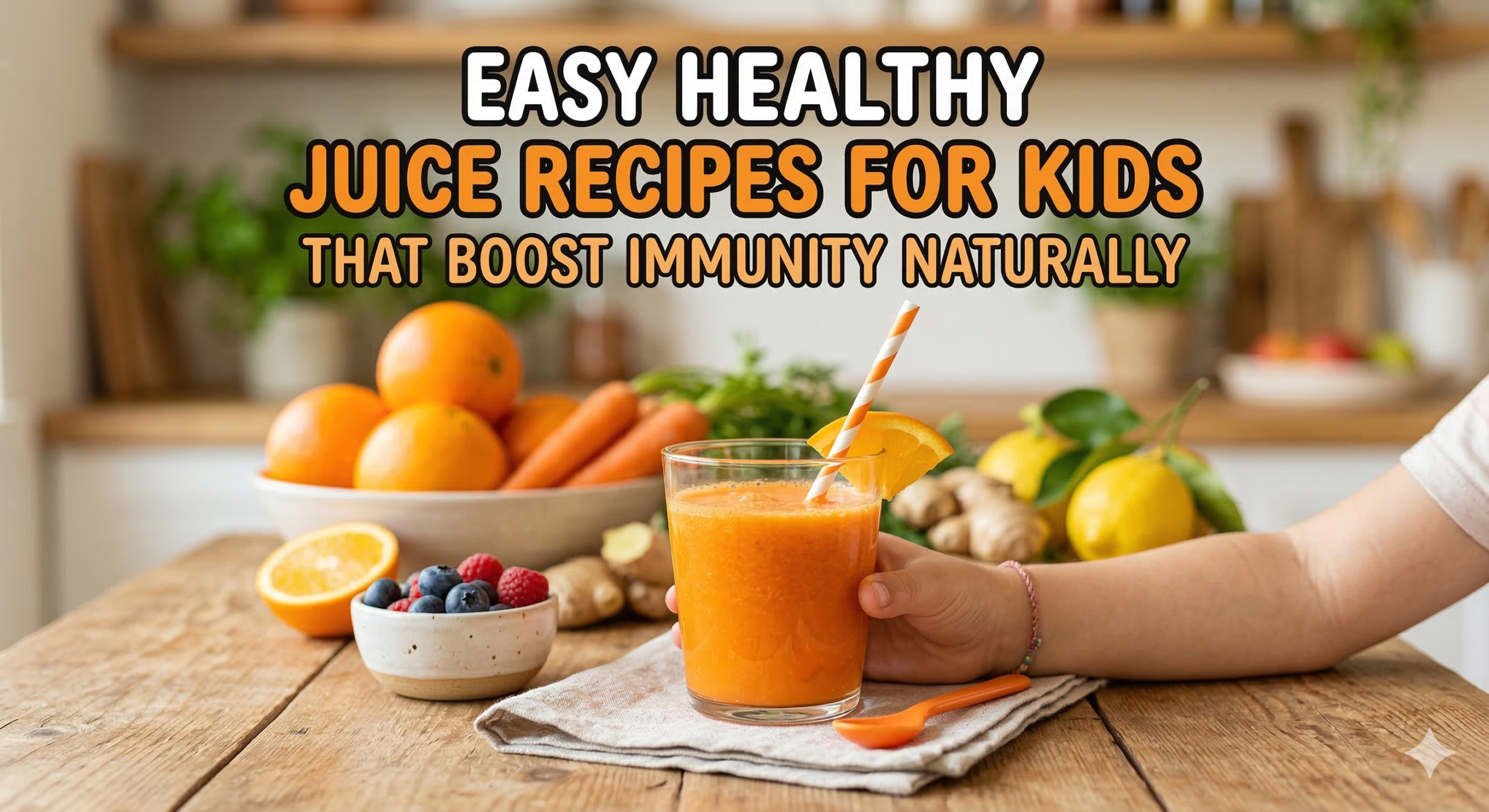
Discover easy healthy juice recipes for kids that naturally boost immunity, packed with vitamins, antioxidants, and delicious flavors for growing children.
Keeping kids healthy and energized is a top priority for every parent. With rising concerns about immunity, especially in today’s fast-paced world, it’s essential to provide children with nutrient-rich foods and beverages. Healthy juice recipes for kids are a delicious and convenient way to boost immunity naturally while introducing them to the benefits of fruits and vegetables.
In this article, we’ll explore easy, tasty, and nutrient-packed juice recipes, backed by the latest nutritional insights. You’ll also discover practical tips to make these juices appealing to even the pickiest eaters. By the end, you’ll have a toolkit of recipes and strategies that support your child’s health in a fun and natural way.
Why Healthy Juices Are Essential for Kids’ Immunity
The Role of Nutrients in Immunity
Children need a balanced intake of vitamins, minerals, and antioxidants to keep their immune systems strong. Some of the most critical nutrients for immunity include:
- Vitamin C: Supports white blood cell function and fights infections
- Vitamin A: Strengthens mucosal barriers and skin, first defense against pathogens
- Zinc: Promotes growth and immune cell function
- Antioxidants: Protect cells from damage caused by free radicals
Benefits of Incorporating Juices
- Easy to consume for children who dislike vegetables
- Quick source of hydration and nutrients
- Can be customized to target specific health goals, like immunity, energy, or digestion
Statistic: According to a study published in the Journal of Pediatrics, children who consume fruits and vegetables regularly are 40% less likely to experience frequent infections.
Tips for Making Kids-Friendly Immune-Boosting Juices
Making juices appealing to kids can be a challenge. Here are strategies to make your juice recipes fun and tasty:
- Use Bright Colors: Kids are attracted to colorful drinks like orange, red, and green juices.
- Add Natural Sweetness: Use fruits like apples, mangoes, or grapes instead of sugar.
- Fun Presentation: Serve in colorful cups, with fun straws or ice cubes shaped like stars.
- Blend, Don’t Strain: Keep pulp to add fiber, but adjust consistency for younger children.
- Rotate Ingredients: Introduce new fruits or vegetables gradually to avoid overwhelming flavors.
Example: A carrot-apple-ginger juice can be sweet with a hint of spice—perfect for kids and packed with Vitamin C.
7 Easy Healthy Juice Recipes for Kids That Boost Immunity Naturally
1. Orange-Carrot Immunity Juice
- Ingredients: 2 oranges, 2 carrots, 1 tsp honey
- Benefits: Rich in Vitamin C and beta-carotene for immune support
2. Apple-Ginger Zing
- Ingredients: 2 apples, 1 tsp ginger, ½ lemon
- Benefits: Antioxidant-rich, aids digestion, boosts immunity
3. Berry Spinach Power Juice
- Ingredients: ½ cup strawberries, ½ cup blueberries, 1 cup spinach, 1 cup water
- Benefits: High in Vitamin C and antioxidants, supports overall health
4. Mango-Celery Glow
- Ingredients: 1 mango, 1 stalk celery, ½ cup pineapple
- Benefits: Rich in Vitamin A, Vitamin C, and hydration
5. Kiwi-Cucumber Refresher
- Ingredients: 2 kiwis, ½ cucumber, ½ lime
- Benefits: Packed with Vitamin C and minerals to strengthen immunity
6. Papaya-Orange Immunity Booster
- Ingredients: ½ cup papaya, 1 orange, 1 tsp flax seeds
- Benefits: Promotes digestion, supports immune system, rich in antioxidants
7. Watermelon-Mint Cooler
- Ingredients: 1 cup watermelon, 5 mint leaves
- Benefits: Hydrating, antioxidant-rich, and perfect for hot days
Tips for Serving:
- Chill before serving
- Use fun straws or cups to make them attractive for kids
- Serve immediately for maximum nutrient retention
Case Study – How Juice Boosted Immunity in Kids
Scenario: A daycare center in California introduced daily fruit and vegetable juices for 6–10-year-olds.
Implementation:
- Provided 200ml juice with lunch, 5 days a week
- Focused on vitamin C and antioxidant-rich fruits like berries, oranges, and mangoes
Outcome (3 months):
- 30% decrease in reported sick days among children
- Improved energy and focus during school hours
- Positive feedback from parents about taste and appeal
Takeaway: Introducing nutrient-rich juices in a structured manner can have measurable benefits on children’s immunity and overall well-being.
Making Juice Part of a Healthy Routine
To maximize immune benefits, juices should complement a balanced diet, not replace meals.
Tips:
- Pair with whole foods like nuts, yogurt, or sandwiches
- Rotate ingredients to prevent monotony
- Encourage children to help with preparation for better engagement
Recommended Daily Juice Intake:
- Ages 4–6: 100–150ml per day
- Ages 7–10: 150–200ml per day
Statistic: According to the CDC, children who consume 2–3 servings of fruits and vegetables daily have a 25% lower risk of common infections.
Conclusion
Healthy juice recipes for kids are an excellent way to boost immunity naturally while making nutrition fun and accessible. From vibrant berries to refreshing watermelon, these juices provide essential vitamins and antioxidants that support growing bodies.
Start incorporating one or two of these recipes into your child’s daily routine and watch their immunity and energy levels improve naturally.
Call to Action: Try one recipe today and share your child’s favorite! For more tips on kid-friendly nutrition, subscribe to our newsletter for weekly updates.
Frequently Asked Questions (FAQs)
- Q: Can I make these juices ahead of time?
A: Yes, but for maximum nutrients, consume within 24 hours and store in an airtight container in the fridge. - Q: Can my child drink juice every day?
A: Yes, in moderation—150–200ml daily is ideal depending on age. - Q: How do I make juices taste good for picky eaters?
A: Use naturally sweet fruits, add fun straws or cups, and blend rather than strain to keep pulp. - Q: Can these juices replace meals?
A: No, they are supplements to a balanced diet, not meal replacements. - Q: Are these recipes safe for children with allergies?
A: Always check for fruit allergies and consult a pediatrician if unsure.
