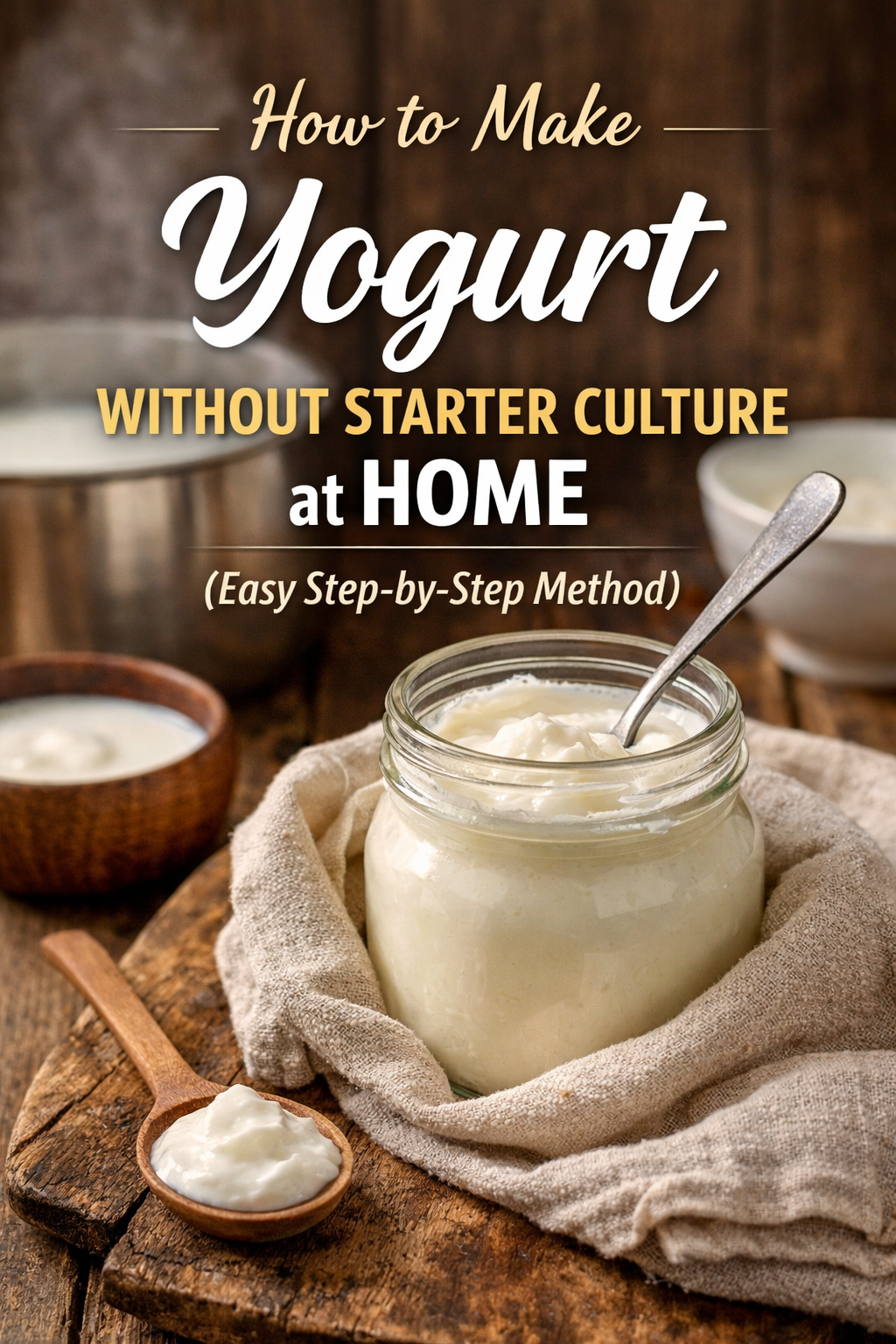
Learn how to make yogurt without starter culture at home with this easy step-by-step method, tips, science insights, and troubleshooting guide.

Can You Really Make Yogurt Without Starter Culture at Home?
Most yogurt recipes tell you one thing: you need a starter culture. Usually that means a spoonful of store-bought yogurt or a commercial packet of live cultures.
But what if you don’t have either?
What if you want to make yogurt without starter culture at home, using only simple ingredients and natural fermentation?
Good news: it’s possible.
In this comprehensive guide, you’ll learn:
- How yogurt forms naturally
- The science behind fermentation
- A step-by-step method to make yogurt without starter culture
- How to thicken it naturally
- Common mistakes (and how to fix them)
- Storage, safety, and flavour tips
According to the Food and Agriculture Organization (FAO), yogurt is produced through fermentation by beneficial bacteria that convert lactose into lactic acid. Research shows fermented dairy products like yogurt may support digestive health and immune function.
And here’s an interesting stat:
- 📊 The UK yogurt market is valued at over £2 billion annually (Statista, recent retail data).
- 📊 Studies show that fermented foods can increase gut microbiome diversity by up to 20% in controlled dietary trials (Stanford research, 2021).
- 📊 Over 70% of UK households purchase yogurt regularly (industry retail surveys).
That’s a lot of yogurt. Now let’s learn how to make your own — naturally.
Understanding How Yogurt Ferments Naturally
Before we dive into the method, it’s important to understand what’s happening scientifically.
Yogurt forms when:
- Milk is heated (to denature proteins).
- It cools to a warm temperature.
- Beneficial bacteria ferment the lactose.
- Lactic acid thickens the milk proteins.
Normally, a starter culture introduces specific bacteria like:
- Lactobacillus bulgaricus
- Streptococcus thermophilus
But here’s the key:
Raw or minimally processed milk naturally contains beneficial bacteria. Even pasteurised milk can ferment when exposed to ambient lactic acid bacteria in a clean environment.
When you make yogurt without starter culture at home, you’re encouraging natural fermentation instead of controlled inoculation.
This is closer to traditional village-style yogurt making.
Ingredients and Equipment You’ll Need
The beauty of this method? It’s simple.
Ingredients:
- 1 litre full-fat milk (best for thickness)
- Optional: 1 tablespoon lemon juice (to encourage fermentation)
Equipment:
- Heavy-bottom saucepan
- Kitchen thermometer
- Glass jar or ceramic bowl
- Clean cloth or lid
- Warm place (oven with light on, cupboard, airing cupboard)
Full-fat milk works best because higher fat content creates thicker yogurt. Skimmed milk will produce a thinner result.
Step-by-Step Guide to Make Yogurt Without Starter Culture at Home
Now the practical part.
Step 1: Heat the Milk
Pour milk into a saucepan and heat slowly to 85–90°C.
Do not boil aggressively. Gentle heating is key.
Why? Heating changes the milk proteins, helping the yogurt thicken later.
Step 2: Cool the Milk
Allow the milk to cool to 42–45°C.
This temperature range encourages fermentation while preventing harmful bacterial growth.
Step 3: Optional – Add a Natural Fermentation Trigger
If you’re worried about fermentation starting, add:
- 1 tablespoon lemon juice
OR - A tablespoon of previously naturally fermented dairy (if available)
This isn’t a commercial starter culture. It simply helps create an acidic environment.
Step 4: Incubate in a Warm Place
Pour the milk into a clean jar. Cover with cloth or lid.
Place it somewhere warm:
- Oven with light on
- Warm cupboard
- Wrapped in a towel
Let it sit undisturbed for 12–24 hours.
Patience is important.
Step 5: Check for Thickness
After incubation:
- The milk should be thicker.
- It may smell slightly tangy.
- The surface may have slight separation.
If it’s still liquid after 24 hours, allow more time.
Step 6: Refrigerate
Once thickened, refrigerate for at least 4 hours.
Cold temperature stops fermentation and improves texture.
You’ve now successfully managed to make yogurt without starter culture at home.
Example – Traditional Homemade Yogurt Method in Rural Households
In many parts of South Asia and Eastern Europe, families traditionally made yogurt without commercial starter packets.
A case example:
In rural households, fresh milk was boiled, cooled, and left overnight in clay pots. The environment naturally introduced lactic acid bacteria. Over time, each batch improved in consistency.
The clay pot played a role too:
- It maintained warmth.
- It absorbed excess whey.
- It improved thickness naturally.
This method shows yogurt existed long before packaged starter cultures.
Troubleshooting and How to Improve Texture
Making yogurt naturally can be unpredictable. Here’s how to fix common issues.
Problem 1: Yogurt Too Runny
Possible reasons:
- Milk too low in fat
- Temperature too cold
- Fermentation time too short
Solutions:
- Use full-fat milk
- Incubate longer
- Strain using cheesecloth (to make Greek-style yogurt)
Problem 2: Sour Taste
Longer fermentation = more tang.
If too sour:
- Reduce incubation time
- Refrigerate earlier
Problem 3: No Fermentation
Possible causes:
- Ultra-high temperature (UHT) milk
- Environment too cold
- Over-sterilised conditions
Tip: Avoid UHT milk when trying to make yogurt without starter culture at home.
Health Benefits of Naturally Fermented Yogurt
When done correctly, natural yogurt can offer:
- Probiotic support
- Improved digestion
- Better lactose tolerance
- Protein-rich nutrition
According to NHS dietary guidelines, fermented dairy products can contribute to daily calcium intake, supporting bone health.
Typical nutrition per 100g (full-fat yogurt):
- ~60–70 calories
- 3–5g protein
- Rich in calcium and B vitamins
Because fermentation reduces lactose content, many lactose-sensitive individuals tolerate yogurt better than milk.
Storage, Safety, and Shelf Life
Homemade yogurt without starter culture typically lasts:
- 5–7 days in the fridge
Safety tips:
- Always use clean jars
- If smell is unpleasant or mould appears, discard
- Keep refrigerated below 5°C
If properly stored, natural yogurt is safe and nutritious.
Conclusion: Should You Try This Method?
Learning how to make yogurt without starter culture at home connects you to traditional food preparation methods.
It’s simple.
It’s affordable.
It reduces reliance on store-bought products.
And it can support gut health.
While it may require some experimentation, the results are rewarding.
Call to Action:
Try this method this week.
Then experiment with thickness, fermentation time, and flavour.
If you found this guide helpful, explore our related yogurt guides and start building your own homemade dairy routine.
Frequently Asked Questions (FAQs)
1. Is it safe to make yogurt without starter culture at home?
Yes, if proper hygiene and temperature control are maintained.
2. How long does it take?
Usually 12–24 hours, depending on room temperature.
3. Can I use plant-based milk?
Without added cultures, plant milks rarely ferment properly. They usually require probiotic capsules.
4. Why is my yogurt separating?
Whey separation is normal. Simply stir or strain.
5. Can I use this yogurt as a starter next time?
Yes. Once you succeed, reserve a spoonful for future batches.
