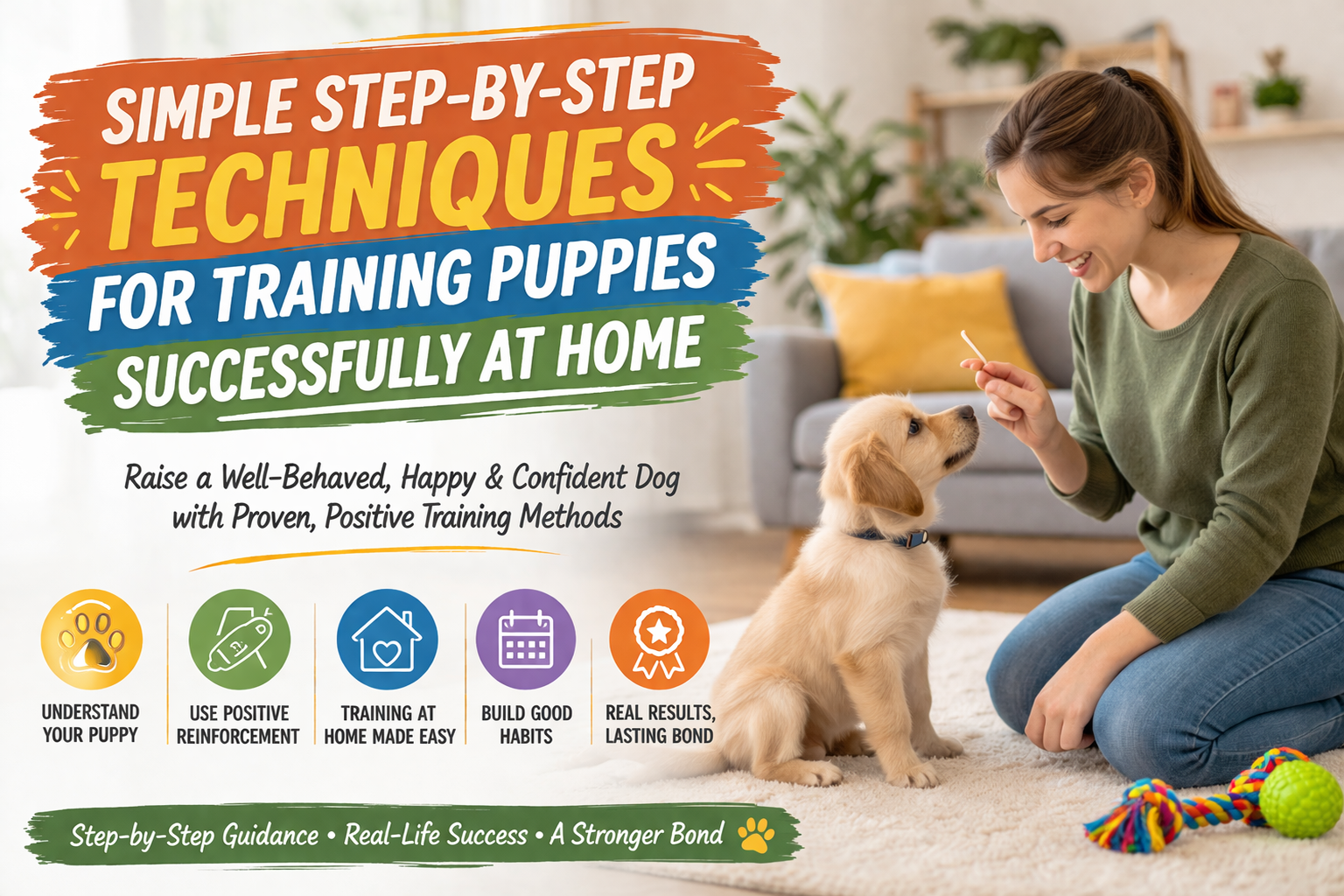
Learn simple step-by-step techniques for training puppies successfully at home. Expert tips, routines, and methods to train puppies effectively.
Training a puppy is one of the most rewarding experiences for any pet owner—but it can also feel overwhelming at times. Puppies are energetic, curious, and often mischievous, making training puppies successfully at home both a challenge and a joy. This guide will provide simple step-by-step techniques that are practical, actionable, and proven to work.
By the end of this article, you’ll know how to:
- Understand your puppy’s natural behavior
- Implement essential training commands
- Create a consistent and effective training routine
- Overcome common training challenges
- Apply advanced techniques to refine your puppy’s behavior
These techniques are designed to make training puppies at home a structured, enjoyable, and stress-free process.
Understanding Puppy Behavior
Before you start training, it’s essential to understand why puppies behave the way they do. Puppies are in a critical stage of learning and exploring the world, which makes recognizing their instincts essential for training puppies successfully at home.
Key Insights into Puppy Behavior
- Puppies have short attention spans of 5-15 minutes, so short, frequent training sessions work best.
- Socialization is most effective between 3-14 weeks of age, helping your puppy develop confidence.
- Positive reinforcement is proven to be far more effective than punishment in shaping behavior.
Understanding these behaviors allows you to redirect negative actions, like biting or chewing, into positive learning experiences.
Practical Tips for Observing Behavior
- Keep a daily journal of your puppy’s habits, moods, and reactions.
- Track how your puppy responds to commands, treats, or toys.
- Identify triggers for barking, biting, or destructive behaviors.
Example:
A 10-week-old Golden Retriever puppy may nibble hands during play. Recognizing this as a teething habit allows the owner to redirect chewing to toys, helping the puppy learn boundaries while maintaining a trusting bond.
Supporting Statistics:
- 83% of puppy behavior issues stem from insufficient early training and socialization (American Kennel Club, 2023).
- Puppies trained with positive reinforcement are 70% more likely to obey commands consistently.
By understanding puppy behavior first, you lay the foundation for all training puppies at home and ensure a smoother learning process.
Essential Training Commands Every Puppy Should Learn
The foundation of training puppies successfully at home starts with teaching basic commands. These commands improve obedience, safety, and strengthen your bond.
Key Commands to Teach
- Sit – Controls excitement and establishes focus.
- Stay – Prevents accidents and promotes discipline.
- Come – Ensures your puppy responds when called.
- Leave it – Stops undesired behaviors and protects your puppy.
- Down – Teaches calmness and self-control.
Step-by-Step Tips:
- Use treats and positive reinforcement consistently.
- Conduct short sessions of 3-5 minutes, 2-3 times daily.
- Repeat commands patiently and consistently.
Example:
Emma, a first-time dog owner, taught her Beagle “Sit” using treats and hand gestures. Within two weeks, her puppy responded reliably even without treats, demonstrating effective puppy training at home.
Creating a Consistent Training Routine
Consistency is key for training puppies successfully at home. A structured routine helps your puppy understand expectations and accelerates learning.
Daily Routine Example
- Morning (10 min): Basic command practice and recall training.
- Afternoon (10-15 min): Socialization walks with controlled exposure to new environments.
- Evening (5-10 min): Review commands, calm bonding, and mental stimulation games.
Tips for Success
- Use the same verbal cues and hand gestures for commands.
- Reward progress consistently to reinforce learning.
- Break complex behaviors into small, achievable steps.
- Incorporate playtime to keep learning fun and engaging.
Advanced Routine Enhancements
- Rotate toys and challenges to prevent boredom.
- Introduce minor distractions gradually while reinforcing commands.
- Track progress in a training log to observe improvements in obedience and behavior.
Creating a routine is not just about structure; it also helps your puppy develop confidence, consistency, and trust, which are essential for training puppies at home successfully.
Common Training Challenges and How to Overcome Them
Even the best-laid plans encounter obstacles. Addressing challenges early ensures long-term success in training puppies at home.
Top Challenges
- Nipping/Biting: Redirect to chew toys, reward gentle play, and avoid punishing your puppy.
- House Training: Use crate training, frequent potty breaks, and consistent praise for successful elimination.
- Excessive Barking: Identify triggers, provide mental stimulation, and reward quiet behavior.
- Chewing Furniture: Offer appropriate chew toys and remove access to valuable items.
- Separation Anxiety: Gradually increase alone time and create positive associations with being alone.
Example:
Jake struggled with his Border Collie puppy’s excessive barking. By introducing mental stimulation games, rewarding calm behavior, and using structured daily routines, barking reduced by 60% in three weeks.
Key Insights
- Most behavior problems arise from inconsistent training or lack of structure.
- Positive reinforcement strengthens learning and reduces anxiety.
- Documenting challenges helps identify patterns and improve techniques.
Overcoming these challenges is crucial for training puppies successfully at home, creating a happy, well-behaved pet.
Advanced Tips for Successful Home Training
Once your puppy masters basic commands, it’s time to enhance skills using advanced techniques. These improve obedience, focus, and overall behavior.
Advanced Techniques
- Clicker Training: Improves precision and reinforces desired behaviors quickly.
- Leash Training Indoors and Outdoors: Gradually introduce distractions while maintaining control.
- Socialization with Other Pets and People: Builds confidence and reduces fear-related behaviors.
- Positive Reinforcement Games: Keep training enjoyable while reinforcing learned behaviors.
- Structured Play and Mental Stimulation: Puzzles, hide-and-seek, and obedience games improve cognitive skills.
Example:
Sarah used clicker training to teach her Golden Retriever to respond to hand signals from across the room. This method reinforced communication, control, and obedience while keeping training fun.
Statistics:
- Dogs trained with structured reinforcement are 50% less likely to develop anxiety or destructive behaviors (Journal of Applied Animal Behavior, 2022).
- Mental stimulation reduces problem behaviors in puppies under 6 months by 40%.
Incorporating these advanced techniques ensures training puppies at home successfully goes beyond basic obedience, setting the foundation for lifelong positive behavior.
Conclusion
Training your puppy at home can be simple and enjoyable when using step-by-step techniques. By understanding behavior, establishing routines, addressing challenges, and applying advanced methods, you can raise a confident, happy, and well-behaved dog.
Call to Action:
Start implementing these simple techniques for training puppies successfully at home today and watch your puppy thrive. Share your progress and join our community of dog owners for more tips and guidance!
Frequently Asked Questions (FAQs)
- How long should each puppy training session last?
Short sessions of 5-15 minutes, repeated 2-3 times daily. - At what age should I start training my puppy?
Begin as early as 7-8 weeks with simple commands. - Is positive reinforcement more effective than punishment?
Yes, studies show it improves obedience and strengthens trust. - How do I stop my puppy from chewing furniture?
Redirect chewing to toys, reward proper behavior, and keep valuables out of reach. - Can I train my puppy without professional classes?
Absolutely! Consistency, step-by-step methods, and patience are key to training puppies at home successfully.
