Discover the top 15 vitamin D rich foods to boost your immunity and bone health. Learn how to easily add to your diet these essential nutrients for a healthier you.
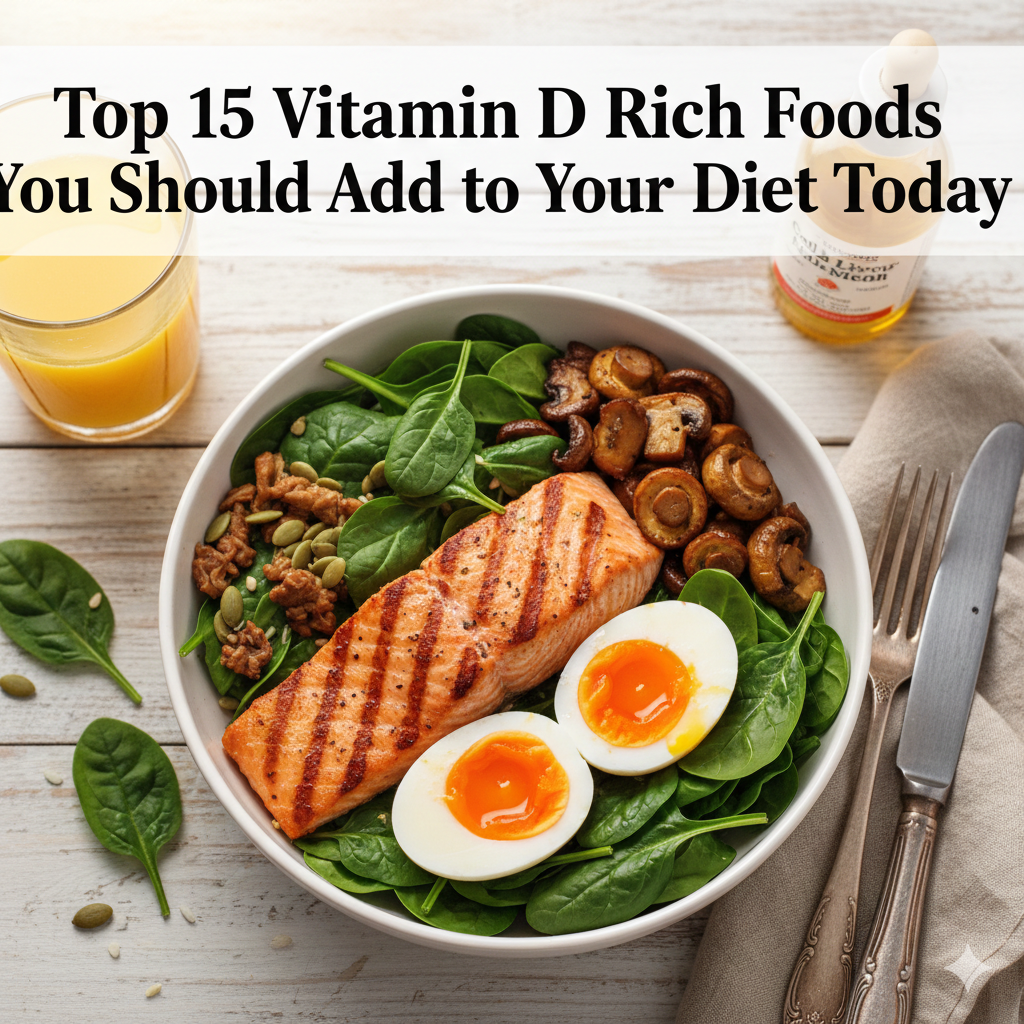
Top 15 Vitamin D Rich Foods You Should Add to Your Diet Today
In an era where remote work and indoor lifestyles have become the norm, the “sunshine vitamin” is no longer just a luxury—it’s a biological necessity. As we navigate 2026, global health data reveals a startling trend: over 1 billion people worldwide are Vitamin D deficient. This isn’t just about feeling a bit sluggish; Vitamin D is a vital pro-hormone that regulates everything from your DNA expression to your mental resilience.
The 2026 Perspective: Why Vitamin D is More Than Just a “Bone Vitamin”
For decades, we were told Vitamin D was only for preventing rickets. Today, we know better. Vitamin D receptors (VDRs) are found in almost every cell in the human body, including the brain, heart, and immune cells. By 2026, clinical focus has shifted toward “personalized blood levels,” where maintaining a range of 50–80 ng/mL is considered optimal for preventing chronic inflammation.
Vitamin D acts as a “volume knob” for the immune system. It prevents it from overreacting (which causes autoimmune issues) while ensuring it is aggressive enough to fight off pathogens. Beyond immunity, researchers have discovered that Vitamin D plays a critical role in muscle protein synthesis and metabolic health. This means that if you are trying to build muscle or lose weight, your efforts might be stalled if your Vitamin D levels are in the gutter. It also facilitates the production of serotonin, the “feel-good” hormone, making it a front-line defense against the rising rates of modern depression.
The Power Players: Top 15 Vitamin D Rich Foods
Finding Vitamin D in nature is a challenge because very few foods contain it in high concentrations. Most of our modern diet is devoid of this nutrient unless we are intentional about our choices. Here is the definitive ranking of the best Vitamin D rich foods:
- Cod Liver Oil: One tablespoon provides over 1,300 IU (227% of the DV).
- Wild-Caught Salmon: Offers up to 988 IU per serving; significantly higher than farmed varieties.
- Mackerel: A fatty fish powerhouse that also provides high levels of Vitamin B12.
- Sardines (in oil): One tin provides roughly 200 IU and a massive dose of calcium.
- Swordfish: Exceptional levels but should be eaten in moderation due to mercury.
- Canned Tuna: Light tuna is a budget-friendly way to get 268 IU per serving.
- Egg Yolks (Pasture-Raised): Chickens that roam in the sun produce eggs with 3 to 4 times more Vitamin D.
- Beef Liver: A nutrient-dense organ meat providing 42 IU per 3.5oz.
- UV-Treated Mushrooms: White or Portobello mushrooms exposed to UV light can provide over 400 IU.
- Fortified Cow’s Milk: Typically enriched with 120 IU per cup.
- Fortified Soy/Oat Milk: Essential for the plant-based community.
- Fortified Orange Juice: A great bioavailable source for those with dairy allergies.
- Ricotta Cheese: Contains more Vitamin D than almost any other common cheese.
- Fortified Cereals: A convenient way to start the day with 10-15% of your daily needs.
- Fortified Yogurt: Combines probiotics with D3 for a dual-action health boost.
To truly benefit from these foods, variety is key. Don’t just stick to eggs; rotate your proteins to include oily fish at least three times a week. If you are plant-based, look specifically for labels that mention “D3” fortification rather than “D2,” as D3 is much more effective at raising your actual blood levels.
The Secret to Absorption: Vitamin D Co-Factors
Simply eating Vitamin D rich foods isn’t always enough. One of the biggest mistakes people make is consuming high doses of Vitamin D in isolation. To truly “unlock” the benefits and ensure the nutrient actually reaches your cells, you need specific Co-Factors. This synergy is what separates a basic diet from an optimized one.
Vitamin D cannot be converted into its active form (calcitriol) without Magnesium. If you are magnesium deficient—which nearly 50% of people are—the Vitamin D you eat simply stays stored in your fat cells, unable to help your immune system. Furthermore, Vitamin K2 acts as the “traffic cop.” While Vitamin D pulls calcium into the blood, K2 ensures that calcium is deposited in your bones and teeth rather than your arteries or kidneys. Without K2, you risk arterial calcification. Always pair your Vitamin D sources with healthy fats like avocado or extra virgin olive oil, as this is a fat-soluble vitamin that requires lipids for transport across the gut lining.
Case Study: Turning the Tide on Seasonal Fatigue
The Subject: Elena, a 29-year-old teacher who suffered from recurring colds and “winter blues.” The Problem: Despite eating a “healthy” diet, Elena’s Vitamin D levels were tested at a dangerously low 22 nmol/L. She struggled with morning stiffness and a total lack of motivation during the darker months.
The Intervention: Elena shifted her diet to include a “Daily D-Plate.” She began starting her day with two pasture-raised eggs sautéed in grass-fed butter (which contains K2). For lunch, she added UV-exposed mushrooms to her salads. For dinner, she prioritized fatty fish like Salmon or Mackerel at least 4 nights a week. She also ensured she was taking a magnesium glycinate supplement in the evening to support the Vitamin D conversion process.
The Result: After 10 weeks of being consistent with these Vitamin D rich foods, Elena’s levels rose to 75 nmol/L. Her “afternoon slump” vanished, her skin clarity improved, and for the first time in years, she made it through the entire winter season without a single respiratory infection or “sick day.”
Building Your Daily “D” Routine
To make this sustainable, you need to turn these foods into a lifestyle. It’s not about one-off meals; it’s about a cumulative effect. Start by auditing your pantry. If your milk or orange juice isn’t fortified, swap it for a brand that is. If you usually eat egg whites, start eating the whole egg—the yolk is where all the Vitamin D and choline live.
Planning your meals around the “Fat-D-K2” triad is the gold standard. For example, a breakfast of fortified Greek yogurt (D), topped with walnuts (Fat), and a side of pasture-raised eggs (K2) creates a perfect bioavailable environment. In the evening, a piece of grilled mackerel served with a side of magnesium-rich spinach ensures your body has the raw materials it needs to repair itself overnight. By making these small, intentional shifts, you ensure that you aren’t just eating nutrients, but actually absorbing them. This proactive approach is the most effective way to protect your health in an increasingly sun-deprived world.
Frequently Asked Questions (FAQ)
Q1: Can I get enough Vitamin D from the sun alone in the winter? A: In most northern latitudes, the sun’s angle is too low from October to March to trigger Vitamin D synthesis. During these months, food is your primary defense.
Q2: Is Vitamin D2 the same as Vitamin D3? A: No. Vitamin D3 (animal-sourced) is much more effective at raising blood levels than Vitamin D2 (plant-sourced).
Q3: Does cooking destroy Vitamin D? A: Vitamin D is heat-stable. Baking or poaching preserves almost all of it, though deep-frying can cause slight degradation.
Q4: How many eggs should I eat for Vitamin D? A: To see a real impact, aim for 2–3 pasture-raised eggs daily, as they contain significantly more D than standard eggs.
Q5: How do I know if I’m deficient? A: Symptoms include bone pain, frequent illness, and low mood. A simple “25-hydroxy vitamin D” blood test is the only way to be sure.
