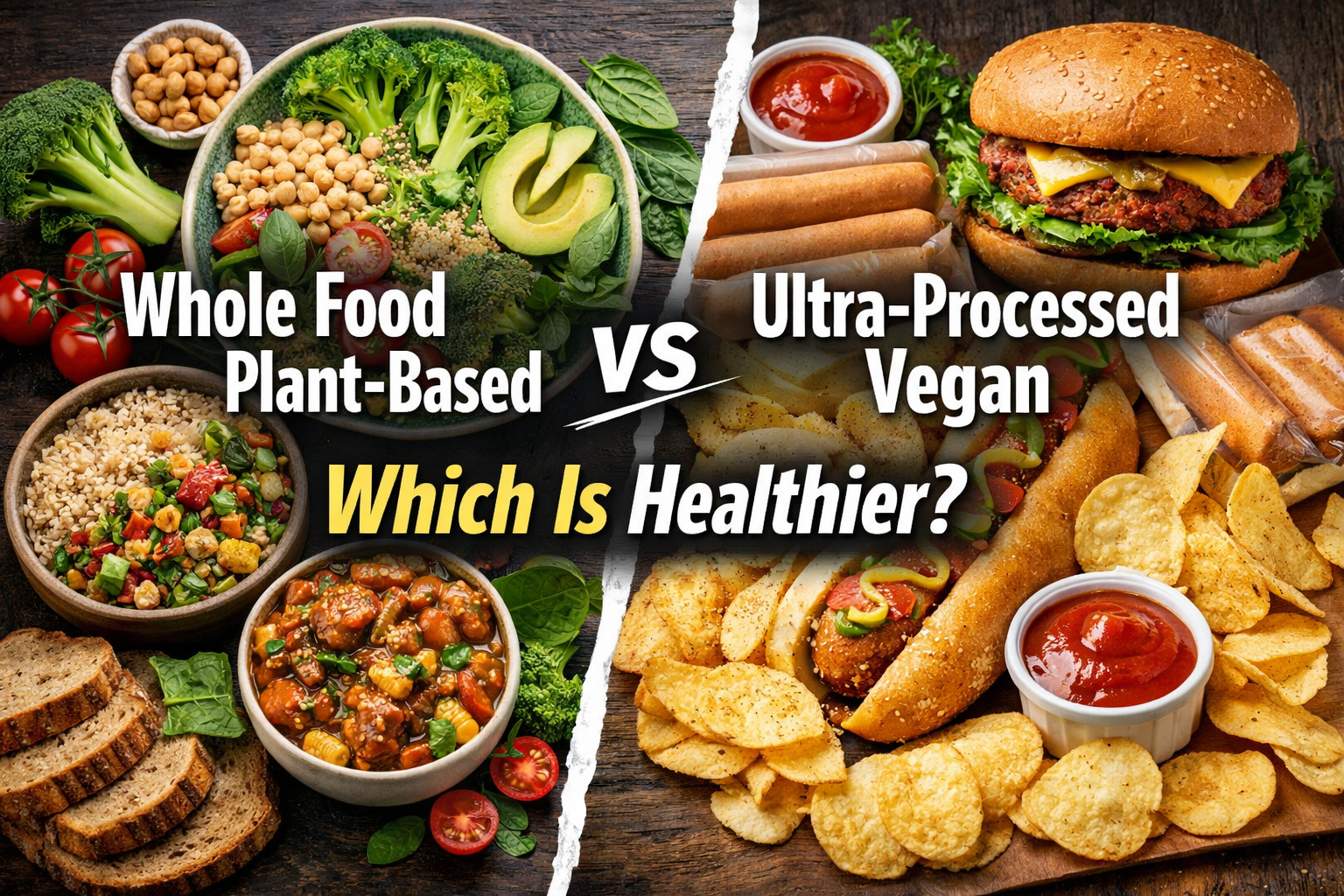
Whole Food Plant-Based vs Ultra-Processed Vegan: Discover which diet is healthier, benefits, risks, and how to make smarter choices for your health.
The plant-based movement has grown rapidly over the past decade, with millions of people exploring vegan lifestyles for health, environmental, and ethical reasons. But not all vegan diets are created equal. While some embrace a whole food plant-based (WFPB) diet, others rely heavily on ultra-processed vegan foods, such as vegan cheeses, meat substitutes, and packaged snacks.
This article dives deep into Whole Food Plant-Based vs Ultra-Processed Vegan diets, comparing their health impacts, nutritional benefits, and long-term effects. By the end, you’ll have actionable insights to choose the best diet for optimal health.
Key Points Covered:
- Understanding the difference between whole food plant-based and ultra-processed vegan diets
- Nutritional benefits and pitfalls of each
- Real-world examples of health outcomes
- Practical tips for transitioning to a healthier plant-based diet
What Is a Whole Food Plant-Based Diet?
A whole food plant-based diet emphasizes unprocessed or minimally processed plant foods. It focuses on fruits, vegetables, whole grains, legumes, nuts, and seeds while avoiding refined sugars, oils, and highly processed foods.
Key Characteristics:
- Whole grains like quinoa, brown rice, and oats
- Fresh vegetables and fruits
- Legumes: beans, lentils, chickpeas
- Nuts and seeds for healthy fats
- Minimal added oils, sugars, or salt
Benefits Backed by Research:
- Reduced risk of heart disease, type 2 diabetes, and obesity
- Supports gut health due to high fiber intake
- Rich in antioxidants and phytonutrients
Example Case Study:
A study in the Journal of Nutrition found participants on a whole food plant-based diet had a 32% lower risk of developing cardiovascular disease over 10 years compared to those consuming processed plant-based foods.
Bullet List of Health Advantages:
- Lowers cholesterol and blood pressure
- Helps with sustainable weight management
- Reduces inflammation
- Improves blood sugar control
What Are Ultra-Processed Vegan Foods?
Ultra-processed vegan foods are manufactured products that, while free from animal ingredients, are high in additives, refined oils, sugars, and salt. Common examples include:
- Vegan hot dogs, burgers, and sausages
- Packaged vegan cheese or spreads
- Sweetened plant-based milks and yogurts
- Snack bars and cookies labeled “vegan”
Why They Can Be Problematic:
- Often high in sodium, saturated fats, and sugar
- Lack dietary fiber and micronutrients
- May contain additives and preservatives that disrupt gut health
Statistics to Note:
- Research shows that diets high in ultra-processed foods are associated with an 18% higher risk of mortality compared to minimally processed diets.
- Ultra-processed plant-based foods often contain 3x more sodium than whole plant-based meals.
Example:
A consumer study reported that people relying on vegan packaged meats consumed 50% fewer nutrients than those eating whole food plant-based meals, despite similar calorie intake.
Nutritional Comparison – Whole Food Plant-Based vs Ultra-Processed Vegan
| Nutrient / Factor | Whole Food Plant-Based | Ultra-Processed Vegan |
|---|---|---|
| Fiber | High | Low |
| Added Sugar | Minimal | Often High |
| Sodium | Low | High |
| Micronutrients (Vitamins & Minerals) | High | Low-Moderate |
| Healthy Fats | From nuts/seeds | Often refined oils |
| Satiety | High | Moderate-Low |
Insights:
- WFPB diets are nutrient-dense and satiating.
- Ultra-processed vegan diets can be convenient but may increase cravings and overeating.
Tip for Readers:
Focus on whole foods even in a vegan diet. If you consume ultra-processed products, balance them with fresh vegetables, legumes, and whole grains.
Health Outcomes and Long-Term Effects
Whole Food Plant-Based:
- Shown to reverse type 2 diabetes in clinical studies
- Supports weight loss without calorie counting
- Lowers risk of chronic diseases, including cancer and heart disease
Ultra-Processed Vegan:
- May contribute to weight gain and metabolic syndrome if consumed excessively
- Limited evidence of long-term health benefits
- Could inadvertently mimic a “junk food vegan diet”
Case Study:
A 5-year observational study found WFPB participants had 40% lower rates of heart disease than vegans who relied mostly on ultra-processed foods.
Practical Tips to Transition to a Healthier Plant-Based Diet
Making the shift from ultra-processed vegan foods to whole food plant-based options can be simple with these strategies:
Step-by-Step Approach:
- Start Small: Replace one ultra-processed item per week with a whole food alternative.
- Meal Prep: Prepare legume-based meals, grain bowls, and salads in advance.
- Read Labels: Avoid foods with refined oils, added sugars, and artificial additives.
- Incorporate Variety: Include colorful vegetables, fruits, and whole grains for micronutrient diversity.
- Snack Smart: Choose nuts, fruits, and hummus instead of packaged vegan snacks.
Bonus Tip: Consider creating a “WFPB pantry” stocked with legumes, grains, nuts, seeds, and frozen vegetables for easy meals.
Conclusion
In the debate of Whole Food Plant-Based vs Ultra-Processed Vegan, the evidence clearly favors whole food plant-based diets for long-term health, disease prevention, and overall well-being. While ultra-processed vegan foods may offer convenience and taste, they cannot match the nutritional benefits of whole foods.
Call-to-Action:
Start incorporating more whole foods into your plant-based diet today. Swap ultra-processed vegan snacks for legumes, vegetables, and whole grains, and feel the difference in your energy, health, and vitality.
Frequently Asked Questions (FAQs)
- Is a vegan junk food diet unhealthy?
Yes, relying on ultra-processed vegan foods can lead to nutrient deficiencies and increased risk of chronic diseases. - Can a whole food plant-based diet provide enough protein?
Absolutely—legumes, tofu, tempeh, nuts, and seeds provide adequate protein for most adults. - Are plant-based meat alternatives bad for health?
Some are fine in moderation, but heavily processed versions can be high in sodium and additives. - How long does it take to see benefits from WFPB?
Many people notice improved energy and digestion within 2–4 weeks; long-term benefits accrue over months to years. - Can I enjoy vegan desserts on a WFPB diet?
Yes, you can make desserts with whole foods, like fruit-based puddings, energy balls, or oatmeal cookies without refined sugar.
