
Green Tea vs Black Tea explained simply—compare antioxidants, caffeine, heart health, digestion, and daily drinking benefits to choose the best tea for you.
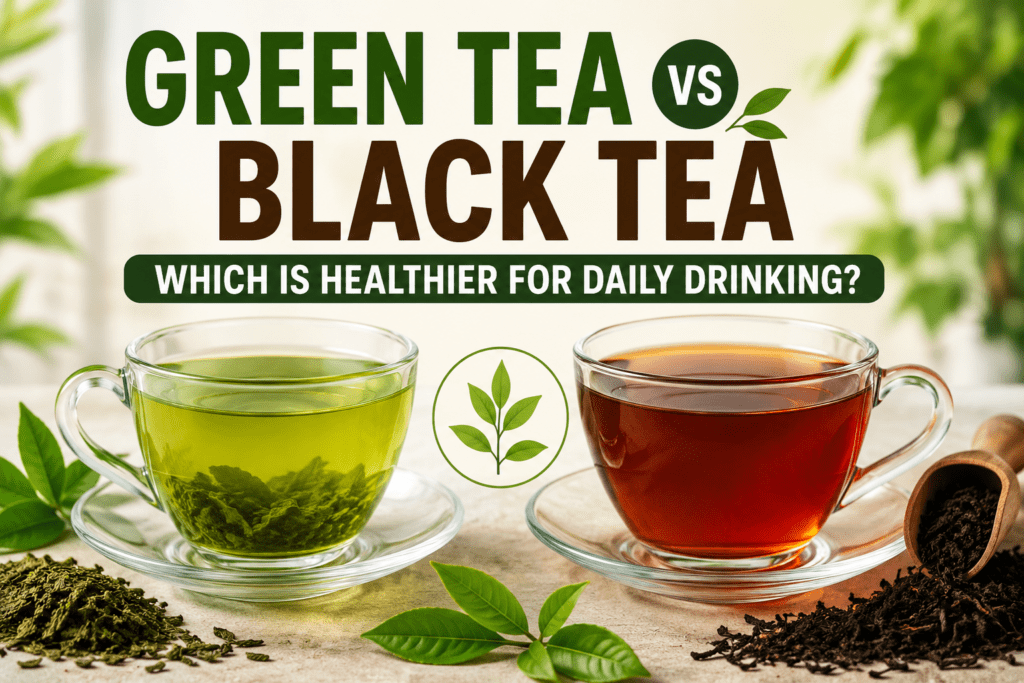
If you drink tea every day, you’ve probably wondered: when it comes to Green Tea vs Black Tea, which is actually healthier for daily drinking?
It’s a fair question.
Both teas come from the same plant—Green tea and Black tea both originate from Camellia sinensis—yet they often get very different reputations. Green tea is usually linked with antioxidants, weight management, and “clean” wellness habits. Black tea is often associated with energy, heart health, and the comfort of a morning ritual.
But when you drink tea every day, what matters isn’t hype.
What matters is:
- Which tea supports long-term health?
- Which tea is gentler on the stomach?
- Which tea gives better energy without jitters?
- Which one fits real life—and is sustainable enough to become a healthy daily habit?
That’s what this guide covers.
You’ll learn how green tea and black tea differ in processing, antioxidants, caffeine, health effects, and practical daily use. We’ll also look at research-backed evidence and a realistic daily-drinking perspective so you can decide what makes the most sense for your body, your routine, and your health goals.
Green Tea vs Black Tea: What’s the Real Difference?
At first glance, green tea and black tea seem like completely different drinks.
In reality, both come from the same plant. The biggest difference is processing.
How green tea is made
Green tea leaves are heated soon after harvesting to stop oxidation.
That means the leaves stay relatively close to their natural state. This helps preserve a high concentration of compounds called catechins, especially EGCG (epigallocatechin gallate)—one of the most studied plant antioxidants in nutrition research.
How black tea is made
Black tea leaves are allowed to fully oxidize before drying.
That oxidation darkens the leaves and changes the chemical profile. Some catechins are transformed into theaflavins and thearubigins, compounds linked with cardiovascular and gut-health benefits.
Why this matters for daily drinking
The health question isn’t simply which tea has “more antioxidants.”
The better question is: which compounds support the kind of health outcomes you care about most?
For example:
- If you’re focused on cell protection and anti-inflammatory support, green tea often gets more attention.
- If you care about heart health, circulation, and digestive tolerance, black tea can be equally valuable.
Quick comparison
| Factor | Green Tea | Black Tea |
|---|---|---|
| Oxidation | Minimal | Full |
| Taste | Fresh, grassy, light | Bold, malty, richer |
| Main antioxidants | Catechins (EGCG) | Theaflavins, thearubigins |
| Caffeine | Usually lower | Usually higher |
| Best for | Lighter daily sipping | Morning energy and stronger flavor |
This is why the Green Tea vs Black Tea debate is less about “good vs bad” and more about different benefits for different daily needs.
Antioxidants and Nutritional Value: Which Tea Offers More Health Protection?
When people ask which tea is healthier, antioxidants are usually the first thing they mean.
And for good reason.
Oxidative stress is associated with aging and chronic disease risk. Tea helps because it provides polyphenols, natural plant compounds that may help neutralize free radicals.
Green tea’s antioxidant advantage
Green tea is famous for its catechin content.
One of the best-known catechins is EGCG, which has been widely studied for potential roles in:
- supporting metabolic health
- reducing oxidative stress
- helping regulate inflammation
- supporting brain and cardiovascular health
Black tea’s antioxidant strengths
Black tea doesn’t lose value simply because oxidation changes catechins.
Instead, it gains different compounds.
Theaflavins and thearubigins have been studied for possible benefits in:
- cholesterol support
- blood vessel function
- gut microbial balance
- cardiovascular resilience
Relevant statistics
Here are some useful data points to understand the bigger picture:
- Tea is the second most consumed beverage in the world after water.
- Research suggests tea can provide hundreds of bioactive compounds, especially polyphenols.
- A typical cup of green tea may contain roughly 50–100 mg of catechins, though preparation changes this.
- A typical cup of black tea usually contains 40–70 mg of caffeine, while green tea often contains 20–45 mg.
- Large observational studies have linked regular tea intake with lower cardiovascular risk in habitual drinkers.
The key takeaway?
Green tea may have a stronger reputation for antioxidant density. Black tea still provides meaningful antioxidant activity—just in a different form.
For daily drinking, both can be beneficial.
Daily Drinking Benefits: How Green Tea and Black Tea Affect Your Body
This is where the conversation becomes practical.
A tea may look impressive on paper. But the better question is: what happens when you drink it every day?
1. Energy and mental focus
Black tea generally contains more caffeine.
That makes it attractive if you want:
- morning alertness
- sharper focus
- a gentler alternative to coffee
Green tea contains less caffeine but includes L-theanine, an amino acid often associated with calm focus.
Many people describe green tea energy as more stable and less intense.
2. Heart health
Both teas may support cardiovascular health.
Some research suggests habitual tea drinkers may benefit through:
- improved endothelial function
- antioxidant protection
- support for blood pressure balance
- possible LDL cholesterol improvements
Black tea often appears in cardiovascular studies because it’s widely consumed globally.
3. Weight management
Green tea tends to dominate this conversation.
That doesn’t mean it melts fat away.
But some studies suggest green tea catechins—especially when combined with caffeine—may slightly support energy expenditure.
Realistically, tea helps most when it replaces sugary beverages.
4. Digestion and stomach comfort
This is highly individual.
Some people find green tea refreshing and digestive.
Others notice that green tea on an empty stomach can cause nausea.
Black tea may feel easier for some people, but stronger tannins can also bother sensitive stomachs.
5. Blood sugar support
Emerging research suggests both green and black tea may have beneficial effects on glucose regulation, though results vary.
Daily drinking summary
If you drink tea every day:
- Choose green tea for lighter caffeine, antioxidant focus, and calm energy.
- Choose black tea for stronger morning energy, richer taste, and robust everyday drinkability.
Green Tea vs Black Tea for Daily Drinking: Which One Fits Different Health Goals?
There isn’t one perfect tea for everyone.
The best tea is the one that matches your lifestyle.
If your goal is weight management
Green tea may be the better fit.
Why:
- lower calories (plain)
- catechin research
- often used as a replacement for sweet drinks
If your goal is steady morning energy
Black tea often wins.
Why:
- more caffeine
- fuller flavor
- often more satisfying than lighter teas
If your goal is calm focus
Green tea usually has the edge.
L-theanine plus moderate caffeine can create a smoother mental effect.
If your goal is reducing coffee intake
Black tea is often easier to transition to first.
It gives more body and familiarity.
If your goal is drinking tea multiple times per day
Green tea may be easier.
Lower caffeine often makes repeated cups more comfortable.
Easy decision guide
Choose green tea if you want:
- lighter caffeine
- antioxidant emphasis
- daily hydration support
- calm focus
Choose black tea if you want:
- stronger flavor
- morning stimulation
- coffee replacement
- satisfying routine
A Real-Life Daily Drinking Example: Which Tea Works Better in Practice?
Let’s make this practical.
Case study: Two daily tea drinkers
Person A: Sarah, 34
Sarah usually drinks two cups of coffee each morning.
Her goals:
- reduce caffeine spikes
- improve afternoon energy
- avoid jitters
She switched to:
- 1 cup of black tea in the morning
- 1 cup of green tea after lunch
Result after several weeks
She noticed:
- smoother energy
- less afternoon crash
- easier hydration habits
Person B: Daniel, 42
Daniel wanted to lose weight and reduce sugary soft drinks.
He replaced his afternoon soda with unsweetened green tea.
Result
He didn’t experience a miracle.
But he:
- reduced sugar intake
- developed a healthier afternoon routine
- felt less sluggish
Why this matters
Daily health benefits often come from habit replacement, not from tea acting like a magic supplement.
That’s one of the most important truths in the Green Tea vs Black Tea discussion.
How to Drink Tea Daily for Maximum Health Benefits
If your goal is health, preparation matters.
Best daily drinking practices
- Drink tea without excess sugar.
Added sugar can cancel out many benefits. - Avoid very high-calorie add-ins.
Heavy cream, syrups, and sweeteners can change the health equation. - Pay attention to timing.
Green tea on an empty stomach can bother some people. - Watch caffeine sensitivity.
If sleep suffers, shift tea earlier in the day. - Consistency matters more than intensity.
One or two daily cups usually matter more than occasional overconsumption.
Practical sweet spot
For many healthy adults, 2–4 cups daily is a realistic range, depending on caffeine tolerance.
So, Green Tea vs Black Tea: Which Is Healthier for Daily Drinking?
Here’s the honest answer:
Both can be healthy.
But they’re healthy in different ways.
Green tea may be better if you want:
- more catechin-focused antioxidants
- lighter caffeine
- calm focus
- a tea you can sip throughout the day
Black tea may be better if you want:
- stronger flavor
- more morning energy
- easier coffee replacement
- a more satisfying daily ritual
The most important truth
The healthiest tea is usually the one you’ll actually drink consistently—without loading it with sugar.
That’s what turns tea into a long-term health habit.
Conclusion
The debate around Green Tea vs Black Tea often assumes there must be one winner.
There isn’t.
For daily drinking, both teas can absolutely fit into a healthy lifestyle.
If you want a lighter, antioxidant-rich option with calmer energy, green tea is an excellent choice.
If you want stronger flavor, slightly more caffeine, and a more robust daily ritual, black tea may suit you better.
Main takeaway
The best tea for health is not necessarily the one with the most hype.
It’s the one you enjoy enough to drink regularly.
Try each tea for one week and notice:
- energy
- digestion
- focus
- cravings
- overall consistency
That simple experiment often tells you more than any headline.
Frequently Asked Questions
1. Is green tea healthier than black tea?
Not automatically. Green tea may offer more catechin antioxidants, while black tea also provides beneficial polyphenols and cardiovascular support.
2. Can I drink green tea every day?
Yes. Many people safely drink green tea daily, especially in moderate amounts.
3. Is black tea bad for daily drinking?
No. Unsweetened black tea can absolutely be part of a healthy daily routine.
4. Which tea has more caffeine?
Black tea usually contains more caffeine than green tea.
5. Which tea is better for weight loss?
Green tea is more commonly associated with weight-management support, but the biggest benefit usually comes from replacing sugary drinks.
