
Discover 7 drought-resistant plants that need no water. Perfect for summer gardens, these low-maintenance plants thrive in heat with minimal care.
Summer gardening can feel like a constant battle against heat, dryness, and rising water bills. Many gardeners struggle to keep their plants alive during hot months, especially when water is limited. If you’ve ever watched your garden wilt under the sun despite your efforts, you’re not alone.
The good news? You don’t need to water your garden every day to keep it thriving. By choosing the right drought-resistant plants, you can create a beautiful, low-maintenance outdoor space that survives—even thrives—on minimal water.
In this guide, we’ll explore 7 drought-resistant plants that need no water, perfect for summer gardens. You’ll also learn how to care for them, design your garden efficiently, and reduce maintenance without sacrificing beauty.
🌱 Why Choose Drought-Resistant Plants for Summer Gardens
Choosing drought-resistant plants is not just a trend—it’s a smart gardening strategy.
Key Benefits:
- Water Conservation:
According to environmental studies, outdoor watering accounts for nearly 30% of household water use. Using drought-resistant plants can cut this drastically. - Low Maintenance:
These plants require less attention, making them ideal for beginners or busy homeowners. - Climate Adaptability:
With rising global temperatures, drought-tolerant plants are more resilient to extreme conditions. - Cost Savings:
Reduced watering leads to lower utility bills over time.
Statistic Insight:
Landscapes designed with drought-tolerant plants can reduce water usage by up to 60%, making them eco-friendly and sustainable.
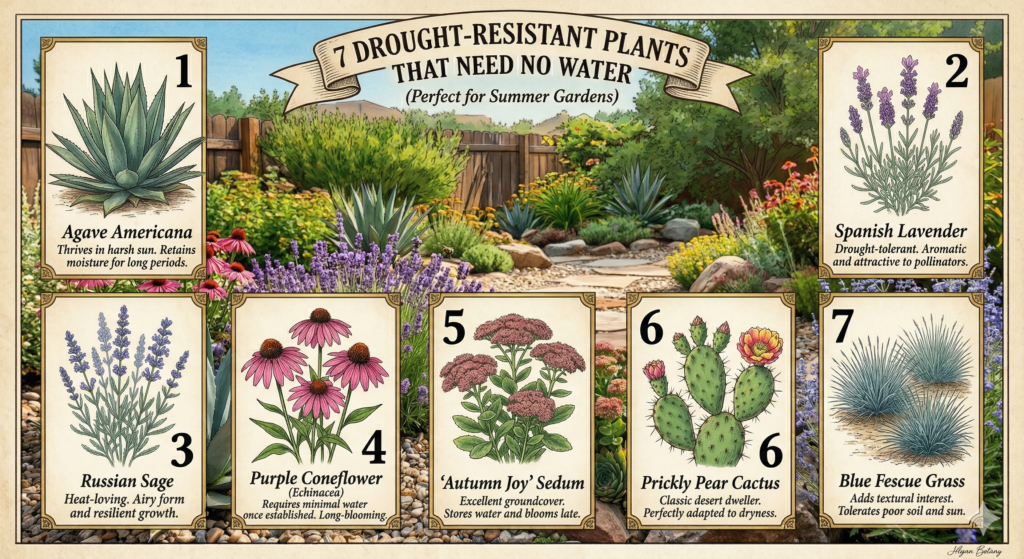
🌼 7 Drought-Resistant Plants That Need No Water
Here are the best drought-resistant plants that need no water once established:
1. Lavender (Lavandula)
- Thrives in full sunlight
- Requires minimal watering
- Produces fragrant purple flowers
2. Agave
- Stores water in thick leaves
- Perfect for hot, dry climates
- Extremely low maintenance
3. Sedum (Stonecrop)
- A hardy succulent
- Ideal for ground cover
- Survives long dry periods
4. Coneflower (Echinacea)
- Bright, colorful blooms
- Attracts pollinators
- Heat and drought tolerant
5. Yucca
- Strong, architectural plant
- Needs almost no water
- Thrives in poor soil
6. Aloe Vera
- Medicinal and decorative
- Stores water efficiently
- Great for containers
7. Blanket Flower (Gaillardia)
- Vibrant summer blooms
- Thrives in dry soil
- Requires little care
✅ Quick Care Tips (Bullet List):
- Plant in well-draining soil
- Avoid overwatering
- Use mulch to retain moisture
- Place in full sunlight
- Space plants properly
🌿 Soil Preparation and Planting Techniques
Even the toughest drought-resistant plants need the right start.
Best Practices:
- Well-Draining Soil:
Prevents root rot and supports healthy growth. - Add Organic Matter:
Compost improves soil structure without increasing water needs. - Mulching:
A 2–3 inch mulch layer can reduce water evaporation by up to 30%. - Plant Grouping:
Group plants with similar water needs to simplify care.
Pro Tip:
Avoid heavy clay soils unless amended—these retain too much water and harm drought-tolerant plants.
💧 Watering Strategies (Yes, Even for “No Water” Plants)
While these plants are labeled “no water”, they still need occasional care—especially during establishment.
Smart Watering Techniques:
- Deep, Infrequent Watering:
Encourages deep root growth. - Morning Watering:
Reduces evaporation loss. - Drip Irrigation:
Efficient and targeted watering system. - Rainwater Harvesting:
Eco-friendly and cost-effective.
Statistic:
Drip irrigation systems can reduce water usage by 30–50% compared to traditional watering methods.
🌺 Creative Garden Design Ideas with Drought-Resistant Plants
Design plays a huge role in maximizing the beauty of your summer garden.
Popular Ideas:
🌵 Rock Garden
- Combine agave, yucca, and sedum
- Use stones for visual contrast
🪴 Container Garden
- Perfect for balconies or patios
- Easy to manage watering
🌾 Native Garden
- Use local drought-resistant species
- Supports biodiversity
🌸 Mixed Flower Beds
- Combine coneflowers and blanket flowers
- Add ornamental grasses
📊 Case Study: A Real-Life Low-Water Garden Transformation
A homeowner in California replaced a traditional lawn with drought-resistant plants like lavender, agave, and sedum.
Results:
- 50% reduction in water usage
- 70% less maintenance time
- Year-round greenery with minimal effort
This example proves that switching to drought-resistant plants that need no water is both practical and visually rewarding.
✅ Conclusion
Creating a thriving summer garden doesn’t have to mean constant watering and maintenance. By choosing the right drought-resistant plants, you can enjoy a beautiful, sustainable outdoor space that flourishes even in extreme heat.
From lavender and agave to sedum and coneflowers, these plants offer the perfect combination of beauty and resilience.
🚀 Call-to-Action:
Start building your low-water summer garden today! Try one or two plants from this list and see the difference. Don’t forget to share your gardening results or ask questions in the comments!
❓ Frequently Asked Questions (FAQs)
1. Do drought-resistant plants really need no water?
No plant needs zero water, but these require very minimal watering once established.
2. Which drought-resistant plant is best for beginners?
Lavender and sedum are excellent beginner-friendly choices.
3. Can these plants survive extreme heat?
Yes, most drought-tolerant plants thrive in high temperatures.
4. How often should I water them initially?
Water regularly for the first few weeks, then reduce frequency.
5. Can I grow them in pots?
Yes, many drought-resistant plants grow well in containers with proper drainage.
