
Discover the key signs of good digestion and learn how a healthy gut naturally boosts your immune system for overall wellness.
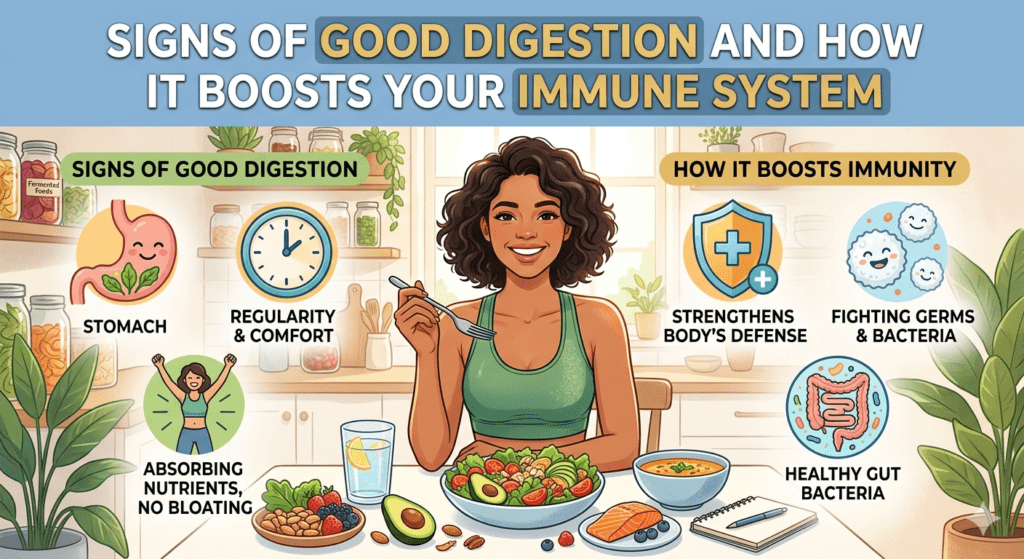
Good digestion is more than just comfortable meals—it’s a window into your overall health. When your digestive system works efficiently, your body absorbs nutrients properly, maintains energy levels, and supports your immune system. Conversely, poor digestion can lead to nutrient deficiencies, fatigue, and weakened immunity.
In this article, we’ll explore the signs of good digestion, explain how a healthy gut directly impacts your immune system, and provide actionable tips to enhance both. By the end, you’ll understand the connection between gut health and immunity and know how to optimize your digestion for better overall wellness.
What Is Good Digestion?
Understanding what constitutes good digestion is the first step to recognizing its signs. Your digestive system breaks down food, absorbs nutrients, and eliminates waste efficiently. Healthy digestion involves:
- Efficient nutrient absorption
- Regular and comfortable bowel movements
- Minimal bloating or gas
- Stable energy levels throughout the day
Key statistic: Studies show that up to 70% of the immune system resides in the gut, highlighting the importance of digestive health in maintaining immunity.
Example: A 35-year-old who experiences minimal bloating, has regular bowel movements, and rarely feels fatigued after meals likely has a well-functioning digestive system.
Top 7 Signs of Good Digestion
Recognizing the signs of healthy digestion can help you gauge your gut health. Here are the top indicators:
- Regular Bowel Movements – Ideally 1-2 times daily, soft but formed.
- Minimal Bloating or Gas – Occasional gas is normal, but excessive bloating signals issues.
- Good Appetite and Satisfying Meals – You feel hungry at regular intervals and satisfied after eating.
- Stable Energy Levels – No post-meal crashes; consistent energy throughout the day.
- Clear Skin – Healthy digestion often reflects in glowing skin, fewer acne breakouts, and reduced inflammation.
- Healthy Weight Maintenance – Digestive efficiency contributes to balanced metabolism and weight management.
- No Heartburn or Acid Reflux – Comfort after meals without frequent indigestion.
Pro Tip: Keeping a digestive journal for one week can help track these signs and identify patterns.
How Good Digestion Supports the Immune System
Your gut is home to trillions of microorganisms that play a critical role in immunity. Here’s how good digestion enhances your immune system:
- Nutrient Absorption: Essential vitamins and minerals (like Vitamin C, Zinc, and Vitamin D) strengthen immune cells.
- Gut Microbiota Balance: Healthy gut bacteria prevent harmful pathogens from colonizing your intestines.
- Inflammation Regulation: Efficient digestion reduces chronic inflammation, which can suppress immune responses.
- Barrier Function: A strong intestinal lining prevents toxins and bacteria from entering the bloodstream.
Example: Research shows that individuals with healthy gut microbiomes are 60% less likely to experience recurrent infections compared to those with poor digestive health.
List: Ways to Improve Gut and Immune Health
- Include fermented foods like yogurt, kimchi, or kefir
- Eat fiber-rich fruits, vegetables, and whole grains
- Stay hydrated
- Manage stress through mindfulness or yoga
- Limit processed foods and added sugars
Foods That Promote Good Digestion and Immunity
Certain foods not only improve digestion but also boost immune function.
Top Foods for Digestive and Immune Health:
- Probiotics: Yogurt, kefir, kombucha – support gut microbiome balance
- Prebiotics: Garlic, onions, asparagus – feed healthy gut bacteria
- Fiber-rich foods: Whole grains, fruits, vegetables – aid regular bowel movements
- Anti-inflammatory foods: Berries, turmeric, fatty fish – support immunity and reduce gut inflammation
- Hydrating foods: Cucumbers, melons, leafy greens – keep digestion smooth
Example Case Study:
A 40-year-old with occasional digestive discomfort improved gut health within 6 weeks by incorporating yogurt, leafy greens, and fermented foods daily, which also coincided with fewer colds during winter.
Lifestyle Habits That Enhance Digestion and Immunity
Good digestion isn’t just about diet; lifestyle habits play a major role.
Key Habits:
- Regular Exercise: Stimulates gut motility and boosts immune function.
- Stress Management: Chronic stress disrupts digestion and weakens immunity.
- Adequate Sleep: Supports gut microbiome balance and immune cell function.
- Mindful Eating: Chew food thoroughly, eat slowly, and avoid overeating.
- Hydration: Water helps move food through the digestive tract and aids nutrient absorption.
Conclusion
A healthy digestive system is the cornerstone of overall wellness. By recognizing the signs of good digestion and making conscious dietary and lifestyle choices, you can naturally strengthen your immune system, maintain energy, and improve overall quality of life.
Call-to-Action: Start today by monitoring your digestion and incorporating gut-friendly foods into your diet. Share your journey with us in the comments below!
Frequently Asked Questions (FAQs)
- What are the first signs of good digestion?
Regular bowel movements, minimal bloating, and stable energy levels are common indicators. - Can good digestion really boost immunity?
Yes. A healthy gut supports nutrient absorption, balances microbiota, and regulates inflammation, all critical for immune health. - How can I improve digestion naturally?
Incorporate fiber-rich foods, probiotics, hydration, exercise, and mindful eating habits. - Is bloating always a sign of poor digestion?
Occasional bloating is normal, but frequent or severe bloating may indicate digestive issues. - Which foods are best for gut and immune health?
Yogurt, kefir, kimchi, whole grains, leafy greens, berries, and fatty fish are excellent choices.
