
Screen time before bed affects your child’s sleep by disrupting melatonin and sleep quality. Learn causes, effects, and simple solutions for parents.
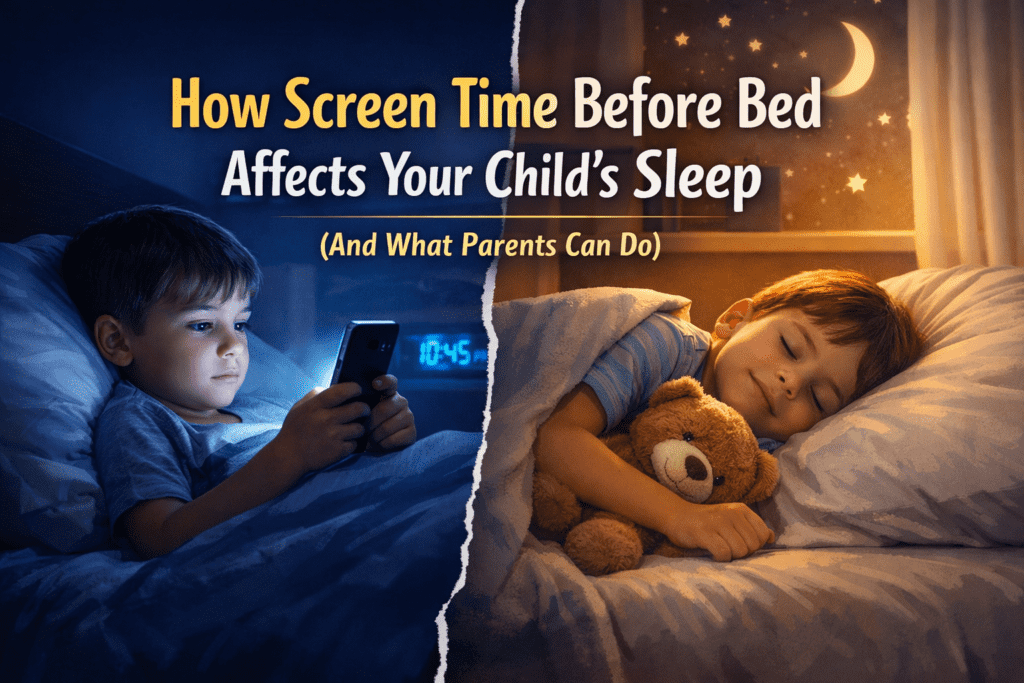
In today’s digital age, screens have become a constant part of children’s lives. Whether it’s watching videos, playing games, or using educational apps, screen exposure is nearly unavoidable.
However, many parents are unaware that screen time before bed affects your child’s sleep in serious ways. From delayed sleep to poor rest quality, this habit can quietly impact your child’s health, mood, and development.
In this article, we’ll explore how this happens and what you can do to improve your child’s sleep—starting tonight.
How Screen Time Before Bed Affects Your Child’s Sleep: The Science Behind It
The main reason screen time before bed affects your child’s sleep is due to blue light exposure.
Screens emit blue light that interferes with melatonin—the hormone that controls sleep. When melatonin levels drop, the brain struggles to recognize that it’s time to sleep.
📊 Key Statistics:
- 70% of children use screens before bedtime
- Screen exposure can delay sleep by up to 60 minutes
- Blue light reduces melatonin production by nearly 50%
As a result, children feel alert instead of sleepy, even when they are physically tired.
How Screen Time Before Bed Affects Your Child’s Sleep Quality and Behavior
It’s not just about falling asleep—screen time before bed affects your child’s sleep quality as well.
Children who use screens late at night often experience:
- Interrupted sleep cycles
- Less deep sleep
- Frequent waking during the night
This leads to noticeable daytime issues like:
- Irritability and mood swings
- Lack of focus in school
- Lower energy levels
Research shows that children exposed to screens before bed are twice as likely to develop sleep-related problems.
Real-Life Example of How Screen Time Before Bed Affects Your Child’s Sleep
Let’s look at a real-world scenario.
A parent noticed their 8-year-old staying awake late every night using a tablet. Despite going to bed on time, the child struggled to fall asleep and woke up tired.
Changes made:
- Screens were removed 1 hour before bedtime
- A reading routine was introduced
- Bedtime became consistent
Results:
Within two weeks:
- The child fell asleep faster
- Morning mood improved
- School performance got better
This example clearly shows how screen time before bed affects your child’s sleep, and how small changes can reverse the problem.
Why Screen Time Before Bed Affects Your Child’s Sleep More Than Adults
Children are more vulnerable to screen effects than adults.
🧠 Reasons include:
- Their brains are still developing
- They are more sensitive to light exposure
- Their sleep cycles are not fully stable
📊 Important Insight:
Children aged 6–12 need 9–12 hours of sleep, yet many don’t get enough due to screen habits.
Additionally, engaging content keeps their minds active, making it even harder to relax before bedtime.
What Parents Can Do When Screen Time Before Bed Affects Your Child’s Sleep
The good news is that you can fix this issue with simple habits.
🛠️ Practical Solutions:
- Set a No-Screen Rule Before Bed
Stop screen use at least 1 hour before sleep - Create a Calming Bedtime Routine
Include reading, storytelling, or quiet activities - Keep Devices Out of the Bedroom
This reduces temptation and distractions - Encourage Daily Physical Activity
Helps children fall asleep faster - Maintain a Consistent Sleep Schedule
Same sleep and wake time every day - Be a Role Model
Children copy your habits—reduce your own screen use
🧾 Conclusion
There’s no doubt that screen time before bed affects your child’s sleep in multiple ways—from delayed sleep to poor quality rest and behavioral issues.
The good news is that small, consistent changes can lead to big improvements.
🎯 Key Takeaways:
- Screens delay sleep and reduce sleep quality
- Children are more vulnerable to screen effects
- Simple routines can improve sleep quickly
👉 Call to Action:
Start reducing screen time before bed today and help your child build healthier sleep habits for a better future.
❓ FAQs
1. Does screen time before bed affect your child’s sleep?
Yes, it disrupts melatonin production and delays sleep.
2. How long before bed should screens be avoided?
At least 1 hour before bedtime.
3. Can night mode reduce the effect?
It helps slightly but doesn’t eliminate the problem.
4. Why are children more affected than adults?
Their brains are still developing and more sensitive to light.
5. What are the best alternatives to screens before bed?
Reading, storytelling, or relaxing music.
