
Discover the top bad breath from stomach causes, hidden digestive problems, symptoms, treatments, and practical ways to improve your breath naturally.
Most people assume bad breath starts in the mouth. While poor oral hygiene, gum disease, and food particles can certainly contribute to unpleasant breath, the truth is that some cases originate much deeper within the body.
If you’ve tried brushing, flossing, tongue scraping, and mouthwash but still struggle with persistent bad breath, your digestive system may be the hidden culprit.
Research suggests that approximately 85-90% of bad breath cases originate in the mouth, while the remaining cases may be linked to digestive disorders, respiratory conditions, or systemic health issues. In particular, certain digestive problems can create odors that travel up the digestive tract and affect your breath.
This article explores the most common bad breath from stomach causes, how digestive problems contribute to halitosis, warning signs to watch for, and practical steps you can take to improve both your digestive health and your breath.
By the end of this guide, you’ll understand the connection between your gut and your breath and know exactly when it’s time to seek professional help.
Understanding the Connection Between Digestive Problems and Bad Breath
Before exploring specific conditions, it’s important to understand how digestive problems can affect breath odor.
Your digestive system begins in the mouth and extends through the esophagus, stomach, small intestine, and large intestine. Any disruption along this pathway can influence the smell of your breath.
Digestive disorders may cause:
- Food fermentation
- Acid reflux
- Bacterial overgrowth
- Delayed stomach emptying
- Excess gas production
- Inflammation within the digestive tract
When these issues occur, odor-producing compounds may travel upward and become noticeable during breathing or speaking.
Key Statistics
- Around 50% of adults experience bad breath at some point in their lives.
- Nearly 20% of people suffer from chronic halitosis.
- GERD affects approximately 20% of adults in many Western countries.
- Helicobacter pylori infects nearly half of the global population.
- Millions of people experience digestive symptoms that may indirectly contribute to bad breath.
Understanding these connections is the first step toward identifying the root cause.
1. Acid Reflux (GERD): The Most Common Digestive Cause
Gastroesophageal Reflux Disease (GERD) is one of the leading digestive causes of chronic bad breath.
GERD occurs when stomach acid repeatedly flows back into the esophagus. This reflux can bring partially digested food, stomach acid, and unpleasant-smelling gases upward.
Symptoms of GERD
- Chronic bad breath
- Heartburn
- Sour taste in the mouth
- Difficulty swallowing
- Frequent burping
- Chest discomfort
The acidic environment can also damage oral tissues and create favorable conditions for odor-causing bacteria.
What Helps?
- Avoid large meals before bedtime
- Reduce spicy and fatty foods
- Maintain a healthy weight
- Elevate your head while sleeping
- Follow medical treatment recommendations
2. Helicobacter pylori Infection
Helicobacter pylori (H. pylori) is a bacteria that colonizes the stomach lining.
Studies have found an association between H. pylori infections and chronic halitosis.
How It Causes Bad Breath
The bacteria produce sulfur-containing compounds and contribute to stomach inflammation, creating odors that may affect breath quality.
Common Symptoms
- Persistent bad breath
- Stomach pain
- Nausea
- Bloating
- Loss of appetite
- Frequent burping
Diagnosis and Treatment
Healthcare providers may use:
- Breath tests
- Stool tests
- Blood tests
- Endoscopy
Treatment typically includes antibiotics and acid-reducing medications.
3. Delayed Stomach Emptying (Gastroparesis)
Gastroparesis occurs when the stomach empties food more slowly than normal.
As food remains in the stomach longer, fermentation can occur, producing unpleasant odors.
Symptoms
- Nausea
- Vomiting
- Bloating
- Early fullness
- Abdominal discomfort
- Chronic bad breath
Risk Factors
- Diabetes
- Nerve damage
- Certain medications
- Previous stomach surgery
Improving gastric motility often helps reduce associated breath issues.
4. Small Intestinal Bacterial Overgrowth (SIBO)
SIBO develops when excessive bacteria accumulate in the small intestine.
These bacteria ferment carbohydrates and produce gases such as hydrogen and methane.
Signs of SIBO
- Bad breath
- Excessive bloating
- Gas
- Abdominal pain
- Food sensitivities
- Diarrhea or constipation
Why Breath Changes
Fermentation produces sulfur compounds and gases that may contribute to unpleasant breath odors.
Addressing bacterial overgrowth often leads to noticeable improvements.
5. Chronic Constipation and Waste Buildup
Constipation is often overlooked when discussing bad breath.
When waste remains in the digestive tract longer than normal, increased fermentation and gas production can occur.
Symptoms
- Infrequent bowel movements
- Bloating
- Abdominal discomfort
- Fatigue
- Bad breath
Helpful Habits
- Increase fiber intake.
- Drink more water.
- Exercise regularly.
- Establish consistent bathroom habits.
- Consume probiotic-rich foods.
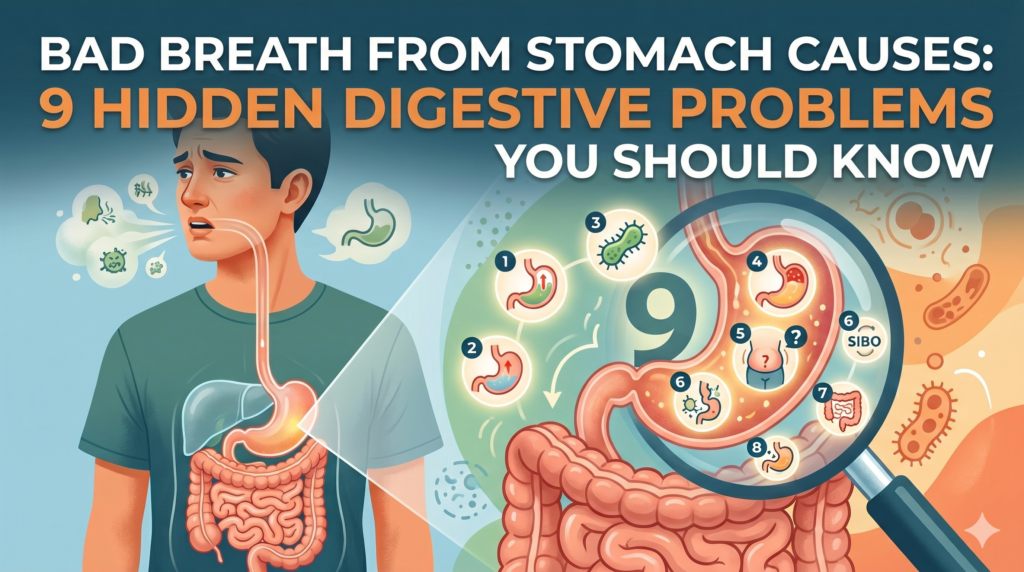
9 Hidden Digestive Problems That May Cause Bad Breath
Beyond the major causes above, several additional digestive conditions may contribute:
- GERD (Acid Reflux)
- H. pylori Infection
- Gastroparesis
- SIBO
- Chronic Constipation
- Peptic Ulcers
- Chronic Gastritis
- Food Intolerances
- Malabsorption Disorders
Each condition can affect digestion, increase fermentation, or promote odor-producing compounds.
Real-Life Example: When Oral Hygiene Isn’t the Problem
Sarah, a 37-year-old marketing professional, struggled with persistent bad breath for over two years.
She brushed twice daily, flossed regularly, and visited her dentist every six months. Despite excellent oral hygiene, the problem persisted.
Eventually, she noticed additional symptoms including heartburn, bloating, and frequent burping.
After consulting a gastroenterologist, she was diagnosed with GERD and an H. pylori infection.
Following treatment and dietary modifications, both her digestive symptoms and bad breath improved significantly within a few months.
Her experience highlights an important lesson: persistent bad breath may sometimes signal an underlying digestive issue rather than a dental problem.
How to Treat Bad Breath Caused by Digestive Problems
Focus on the Root Cause
Treating the underlying digestive disorder is the most effective solution.
Improve Your Diet
Consider limiting:
- Excess sugar
- Processed foods
- Carbonated drinks
- Excessive alcohol
- Trigger foods for reflux
Instead, focus on:
- Fruits
- Vegetables
- Whole grains
- Lean proteins
- Fermented foods
Stay Hydrated
Adequate hydration supports digestion and helps reduce bacterial growth.
Support Gut Health
Helpful options may include:
- Probiotics
- Prebiotics
- Fiber-rich foods
- Regular physical activity
Seek Medical Evaluation
Consult a healthcare provider if symptoms persist despite lifestyle changes.
When Should You See a Doctor?
Seek professional medical advice if bad breath occurs alongside:
- Persistent heartburn
- Unexplained weight loss
- Difficulty swallowing
- Chronic abdominal pain
- Frequent vomiting
- Blood in stool
- Severe bloating
These symptoms may indicate a more serious digestive condition requiring evaluation.
Conclusion
Bad breath is not always a dental problem. In many cases, the digestive system plays a significant role.
Conditions such as GERD, H. pylori infection, gastroparesis, SIBO, and chronic constipation can all contribute to persistent bad breath. Understanding these bad breath from stomach causes allows you to move beyond temporary fixes and address the real source of the problem.
The key is to focus on improving digestive health, identifying underlying conditions, and seeking professional guidance when necessary.
If you’ve been struggling with chronic bad breath despite good oral hygiene, consider evaluating your digestive health. The answer may be in your stomach rather than your mouth.
Frequently Asked Questions
1. Can bad breath really come from the stomach?
Yes. Certain digestive disorders such as GERD, H. pylori infection, and delayed stomach emptying can contribute to chronic bad breath.
2. What stomach condition causes the worst breath odor?
GERD and H. pylori infections are among the most commonly associated digestive causes of persistent bad breath.
3. Does treating digestive problems improve bad breath?
In many cases, addressing the underlying digestive disorder significantly improves breath quality.
4. How can I tell if my bad breath comes from my stomach?
Signs may include heartburn, bloating, burping, nausea, or persistent bad breath despite good oral hygiene.
5. Should I see a dentist or a doctor first?
Start with a dental examination. If no oral cause is identified, consult a healthcare provider or gastroenterologist for further evaluation.
