
Fiber vs Protein for Weight Loss: Discover which nutrient keeps you full longer, helps you lose fat faster, and supports sustainable weight loss.
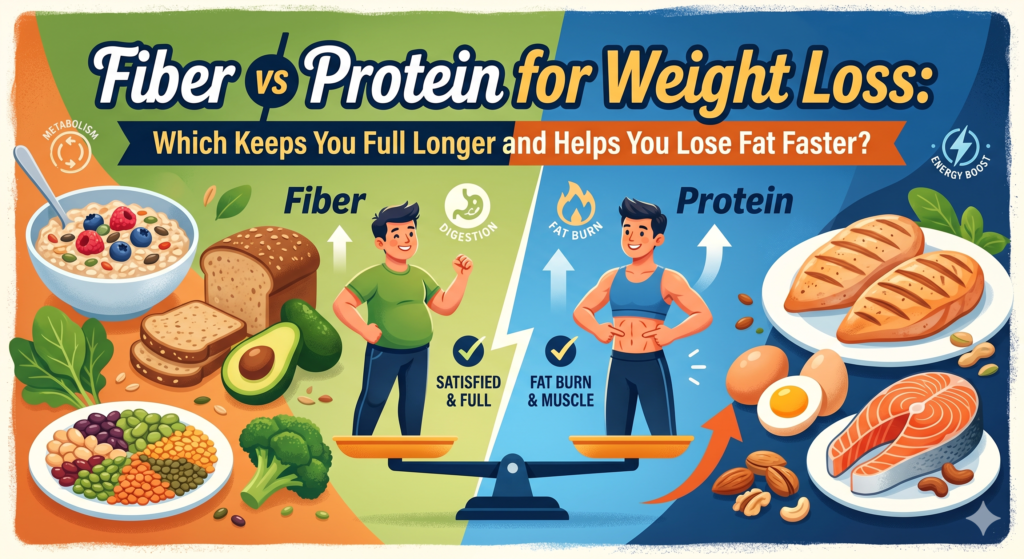
When it comes to weight loss, two nutrients consistently dominate the conversation: fiber and protein. Both are praised for their ability to reduce hunger, improve satiety, and support healthy body composition. But if your primary goal is to lose fat faster, which one deserves the spotlight?
The debate around fiber vs protein for weight loss has become increasingly relevant as more people look for sustainable ways to manage their weight without following restrictive diets. While protein is often associated with muscle building and metabolism, fiber is celebrated for its digestive benefits and powerful appetite-control effects.
Research shows that both nutrients can play important roles in weight management. However, they work through different mechanisms, and understanding these differences can help you make smarter dietary choices.
In this comprehensive guide, you’ll learn:
- How fiber and protein affect weight loss
- Which nutrient keeps you full longer
- Which supports fat loss more effectively
- The benefits of combining both nutrients
- Practical strategies for incorporating fiber and protein into your diet
By the end, you’ll know exactly how to use both nutrients to maximize fat loss while maintaining long-term health.
What Is Fiber and How Does It Support Weight Loss?
Fiber is a type of carbohydrate that the body cannot fully digest. Unlike sugars and starches, fiber passes through the digestive system relatively intact.
There are two main types of fiber:
Soluble Fiber
Soluble fiber absorbs water and forms a gel-like substance in the digestive tract.
Common sources include:
- Oats
- Beans
- Lentils
- Apples
- Chia seeds
Insoluble Fiber
Insoluble fiber adds bulk to stool and supports digestive regularity.
Common sources include:
- Whole grains
- Vegetables
- Nuts
- Seeds
How Fiber Promotes Weight Loss
Fiber supports weight loss through several mechanisms:
1. Increases Fullness
High-fiber foods take longer to digest, helping you stay satisfied after meals.
2. Reduces Calorie Intake
Studies suggest people who consume more fiber naturally eat fewer calories throughout the day.
3. Supports Gut Health
Fiber feeds beneficial gut bacteria, which may influence body weight, metabolism, and appetite regulation.
4. Slows Digestion
The slower absorption of nutrients helps stabilize blood sugar levels and reduce cravings.
Key Statistic
Research indicates that increasing daily fiber intake by 14 grams may reduce calorie intake by approximately 10% and contribute to meaningful weight loss over time.
What Is Protein and Why Is It Essential for Fat Loss?
Protein is one of the three macronutrients and plays a critical role in building and repairing tissues.
Protein-rich foods include:
- Chicken breast
- Fish
- Eggs
- Greek yogurt
- Cottage cheese
- Tofu
- Tempeh
- Lentils
How Protein Supports Weight Loss
1. Increases Satiety
Protein is often considered the most filling macronutrient.
2. Preserves Muscle Mass
During weight loss, maintaining muscle is essential for sustaining metabolic rate.
3. Boosts Thermogenesis
Protein requires more energy to digest compared to carbohydrates and fats.
4. Reduces Hunger Hormones
Protein can decrease ghrelin levels while increasing hormones associated with fullness.
Key Statistics
- Protein digestion can increase calorie expenditure by 20–30%.
- Higher-protein diets are associated with greater fat loss while preserving lean muscle.
- Adults consuming protein-rich breakfasts often report reduced cravings later in the day.
Fiber vs Protein for Weight Loss: Which Keeps You Full Longer?
Satiety is one of the most important factors in successful weight loss.
The longer you stay full, the less likely you are to snack unnecessarily or overeat.
How Fiber Creates Fullness
Fiber increases the physical volume of food without significantly increasing calories.
Examples:
- A large bowl of vegetables
- Oatmeal with berries
- Lentil soup
These foods occupy more space in the stomach and slow digestion.
How Protein Creates Fullness
Protein affects appetite-regulating hormones.
Benefits include:
- Reduced hunger
- Increased satisfaction after meals
- Better appetite control
The Winner for Fullness
If measuring immediate appetite suppression, protein generally has a slight advantage.
However, fiber often provides longer-lasting fullness because it slows digestion and stabilizes blood sugar.
Practical Takeaway
The most effective strategy is combining both nutrients.
Example:
Instead of eating oatmeal alone, add Greek yogurt and chia seeds.
This combination delivers:
- Fiber
- Protein
- Long-lasting satiety
Which Helps You Lose Fat Faster?
Many people assume weight loss and fat loss are identical.
They are not.
Weight loss includes:
- Fat
- Water
- Muscle
Fat loss specifically targets body fat while preserving lean tissue.
Protein’s Advantage for Fat Loss
Protein supports:
- Muscle retention
- Higher calorie burn
- Improved body composition
This makes protein especially valuable during calorie deficits.
Fiber’s Advantage for Fat Loss
Fiber supports:
- Reduced calorie intake
- Better blood sugar control
- Reduced overeating
These benefits create conditions favorable for fat loss.
Case Study Example
Consider two individuals consuming identical calories:
Person A
- Low fiber
- High processed foods
- Moderate protein
Person B
- High fiber
- High protein
- Mostly whole foods
After several months, Person B is likely to experience:
- Greater fat loss
- Better appetite control
- Improved metabolic health
- Higher dietary adherence
The combination of fiber and protein creates a powerful synergy that improves long-term outcomes.
The Best Strategy: Combining Fiber and Protein for Maximum Results
The debate shouldn’t be fiber versus protein.
Instead, it should be fiber plus protein.
Research consistently shows that diets rich in both nutrients support:
- Better appetite control
- Reduced calorie intake
- Improved body composition
- Sustainable weight management
High-Fiber, High-Protein Food Combinations
Breakfast
- Greek yogurt with berries and chia seeds
- Protein oats with flaxseed
Lunch
- Chicken salad with vegetables and beans
- Lentil soup with lean turkey
Dinner
- Salmon with quinoa and broccoli
- Tofu stir-fry with vegetables
Snacks
- Apple with cottage cheese
- Edamame
- Roasted chickpeas
Daily Targets
General recommendations:
- Fiber: 25–38 grams daily
- Protein: 1.2–2.0 grams per kilogram of body weight
Meeting both targets can dramatically improve hunger management and weight-loss success.
Conclusion
When comparing fiber vs protein for weight loss, there is no single winner.
Protein excels at preserving muscle, boosting metabolism, and reducing hunger hormones. Fiber shines by increasing fullness, supporting gut health, and helping control calorie intake.
If your goal is to lose fat faster while maintaining long-term results, the most effective approach is combining both nutrients in every meal.
Focus on whole foods, prioritize lean protein sources, and increase your intake of fruits, vegetables, legumes, and whole grains.
Small changes made consistently can lead to significant results over time.
Call to Action
Ready to transform your diet? Start by adding one high-protein, high-fiber meal to your daily routine this week and track how your hunger, energy, and weight-loss progress improve.
Frequently Asked Questions
1. Is fiber or protein better for weight loss?
Both contribute to weight loss in different ways. Protein supports muscle retention and metabolism, while fiber reduces hunger and calorie intake.
2. Which keeps you full longer, fiber or protein?
Protein generally provides stronger short-term satiety, while fiber often delivers longer-lasting fullness due to slower digestion.
3. Can I lose weight by eating more fiber?
Increasing fiber intake can help reduce calorie consumption and improve appetite control, making weight loss easier.
4. How much protein should I eat for fat loss?
Most experts recommend 1.2–2.0 grams of protein per kilogram of body weight during weight-loss phases.
5. Should I eat fiber and protein together?
Yes. Combining fiber and protein often produces the strongest appetite-control and fat-loss benefits.
