
Learn how to get 100g protein on a vegan diet without protein powder using whole foods, meal plans, and practical nutrition strategies.
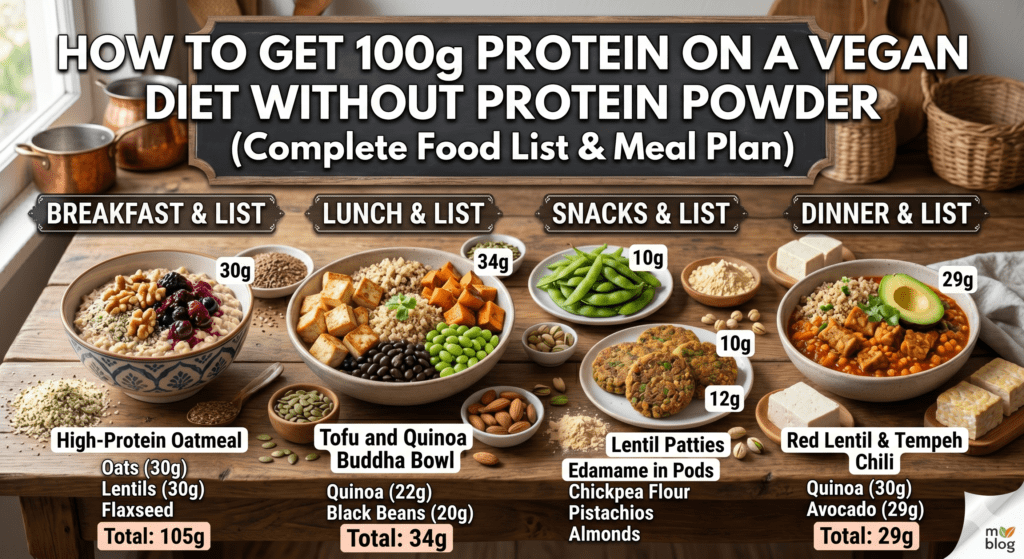
One of the most common questions people ask when switching to a plant-based lifestyle is: “How do I get enough protein?” For many, reaching 100 grams of protein per day seems impossible without relying on protein powders, shakes, or supplements.
The good news is that it is entirely possible to get 100g of protein on a vegan diet using whole, minimally processed foods. In fact, legumes, soy products, whole grains, nuts, and seeds can provide substantial amounts of protein while also delivering fiber, vitamins, minerals, and antioxidants that many animal-based protein sources lack.
Research consistently shows that well-planned vegan diets can meet protein requirements for most adults, including active individuals and those looking to build muscle. The key is understanding which foods are rich in protein and how to combine them effectively throughout the day.
In this guide, you’ll learn:
- How much protein vegans actually need
- The best high-protein vegan foods
- A complete 100g protein vegan meal plan
- Common mistakes to avoid
- Practical strategies for hitting your protein goals without protein powder
Whether you’re interested in improving your health, building muscle, losing weight, or simply eating more plant-based meals, this guide will show you exactly how to reach 100 grams of protein on a vegan diet.
How to Get 100g Protein on a Vegan Diet: Why Protein Matters
Protein plays a critical role in nearly every function of the human body. It helps build and repair tissues, supports immune function, produces enzymes and hormones, and maintains muscle mass.
Many people assume that vegan diets are naturally low in protein. However, studies have found that most individuals can meet their protein needs through a balanced plant-based diet.
Key Protein Statistics
- The Recommended Dietary Allowance (RDA) for protein is 0.8 grams per kilogram of body weight.
- Active individuals often benefit from 1.2–2.0 grams per kilogram of body weight.
- Protein contains 4 calories per gram.
- A cup of cooked lentils provides approximately 18 grams of protein.
- A block of firm tofu can provide 35–45 grams of protein, depending on the brand.
For someone weighing 70 kg (154 lbs), 100 grams of protein daily is a realistic target for muscle maintenance and fitness goals.
Do Vegans Need Complete Proteins?
A complete protein contains all nine essential amino acids.
Examples of complete plant proteins include:
- Soybeans
- Tofu
- Tempeh
- Edamame
- Quinoa
- Buckwheat
- Hemp seeds
Even if individual foods aren’t complete proteins, eating a variety of plant foods throughout the day generally provides all essential amino acids.
Best Vegan Protein Foods and Plant Based Protein Sources
If your goal is to get 100g protein on a vegan diet, focus on foods that offer a high protein-to-calorie ratio.
Legumes
Lentils
Protein: 18g per cooked cup
Lentils are affordable, versatile, and packed with fiber, iron, and folate.
Chickpeas
Protein: 15g per cooked cup
Great for salads, curries, soups, and homemade hummus.
Black Beans
Protein: 15g per cooked cup
Excellent source of protein and complex carbohydrates.
Kidney Beans
Protein: 13g per cooked cup
Ideal for chili, stews, and rice dishes.
Soy-Based Foods
Tofu
Protein: 10–15g per serving
One of the most protein-dense vegan foods available.
Tempeh
Protein: 18–20g per serving
Fermented soybeans provide protein, probiotics, and a firm texture.
Edamame
Protein: 17g per cooked cup
Perfect as a snack or salad topping.
Whole Grains
Quinoa
Protein: 8g per cooked cup
A complete protein that works well in bowls and salads.
Oats
Protein: 10–12g per cup
An excellent breakfast option.
Whole Wheat Pasta
Protein: 7–8g per serving
Contains more protein than traditional pasta.
Nuts and Seeds
Hemp Seeds
Protein: 10g per 3 tablespoons
One of the richest plant-based protein sources.
Pumpkin Seeds
Protein: 8g per ounce
Great for snacking and salads.
Chia Seeds
Protein: 5g per 2 tablespoons
Also rich in omega-3 fatty acids.
Almonds
Protein: 6g per ounce
A nutritious snack and ingredient.
Protein-Rich Vegetables
Although vegetables are not primary protein sources, they contribute to daily intake.
Examples include:
- Spinach
- Broccoli
- Green peas
- Brussels sprouts
- Kale
Complete Food List: Vegan Foods Ranked by Protein Content
Here is a practical list of high-protein vegan foods:
Top Vegan Protein Sources
- Tempeh – 20g per serving
- Lentils – 18g per cup
- Edamame – 17g per cup
- Chickpeas – 15g per cup
- Black beans – 15g per cup
- Tofu – 10–15g per serving
- Hemp seeds – 10g per serving
- Oats – 10–12g per cup
- Quinoa – 8g per cup
- Pumpkin seeds – 8g per ounce
- Whole wheat pasta – 8g per serving
- Chia seeds – 5g per serving
Protein Combination Examples
Combining foods can improve amino acid balance:
- Rice + beans
- Whole grain bread + peanut butter
- Hummus + pita bread
- Quinoa + lentils
- Oats + hemp seeds
These combinations help create balanced meals while increasing total protein intake.
Full 100g Protein Vegan Meal Plan Without Protein Powder
The easiest way to reach 100 grams of protein is to spread intake across multiple meals.
Breakfast (28g Protein)
Protein Oatmeal Bowl
Ingredients:
- 1 cup oats = 10g
- 3 tbsp hemp seeds = 10g
- 2 tbsp peanut butter = 8g
Total: 28g protein
Lunch (30g Protein)
Lentil and Quinoa Bowl
Ingredients:
- 1 cup lentils = 18g
- 1 cup quinoa = 8g
- Vegetables = 4g
Total: 30g protein
Snack (12g Protein)
Edamame Snack Bowl
Ingredients:
- 1 cup edamame = 12–17g
Total: 12g protein
Dinner (32g Protein)
Tofu Stir-Fry
Ingredients:
- 250g tofu = 25g
- Vegetables = 4g
- Brown rice = 3g
Total: 32g protein
Daily Total
Breakfast: 28g
Lunch: 30g
Snack: 12g
Dinner: 32g
Grand Total: 102g Protein
This demonstrates how easy it can be to reach 100 grams without a single scoop of protein powder.
Common Mistakes When Trying to Get Protein on a Vegan Diet
Many people struggle with protein intake because they focus on the wrong foods.
Mistake #1: Eating Too Few Legumes
Beans, lentils, chickpeas, and soy foods should form the foundation of a high-protein vegan diet.
Mistake #2: Relying on Vegetables Alone
Vegetables are nutritious but generally low in protein compared to legumes and soy products.
Mistake #3: Not Planning Meals
Protein intake becomes much easier when meals are structured around protein-rich foods.
Mistake #4: Ignoring Soy Foods
Tofu, tempeh, and edamame are among the most effective vegan protein sources.
Mistake #5: Skipping Protein at Breakfast
Starting the day with a protein-rich breakfast makes reaching daily goals much easier.
Case Study: How Sarah Reached 100g Protein Daily Without Supplements
Sarah, a 32-year-old fitness enthusiast, switched to a vegan diet but worried about maintaining muscle mass.
Initially, she averaged only 55–60 grams of protein daily.
After making a few changes, she reached over 100 grams consistently:
- Added hemp seeds to breakfast
- Included lentils at lunch
- Ate edamame as a snack
- Used tofu or tempeh at dinner
Within a few weeks, she was comfortably consuming over 100 grams of protein without shakes or supplements.
The lesson is simple: strategic food choices matter more than supplements.
Conclusion
Getting 100g protein on a vegan diet without protein powder is completely achievable.
The secret is focusing on protein-rich whole foods such as lentils, chickpeas, tofu, tempeh, edamame, quinoa, oats, and seeds.
By distributing protein across breakfast, lunch, dinner, and snacks, you can easily meet your goals while enjoying a nutrient-dense diet.
Start by incorporating one or two high-protein foods into every meal, track your intake for a week, and adjust as needed. You’ll likely discover that reaching 100 grams is far easier than most people think.
If you’re serious about improving your nutrition, muscle growth, or overall health, begin implementing the meal plan outlined in this guide today.
Frequently Asked Questions
1. Can you get 100g protein on a vegan diet without supplements?
Yes. Foods such as tofu, tempeh, lentils, beans, edamame, quinoa, and hemp seeds can provide more than enough protein.
2. Is 100g protein enough for muscle growth?
For many individuals, 100g daily is sufficient for maintaining and building muscle, depending on body weight and activity level.
3. What is the highest-protein vegan food?
Tempeh, tofu, seitan, lentils, and edamame are among the highest-protein vegan foods.
4. Do vegans need complete proteins at every meal?
No. Consuming a variety of plant foods throughout the day is generally sufficient.
5. What is the easiest way to increase vegan protein intake?
Add legumes, tofu, tempeh, hemp seeds, and edamame to your meals consistently.
