
Learn how to build a reading habit in 30 days with simple, proven strategies for beginners. Start reading consistently and finish more books.
Have you ever bought a book with the best intentions, only to let it collect dust on a shelf? You’re not alone. Many people want to read more but struggle to stay consistent. Between busy schedules, endless social media scrolling, and daily responsibilities, reading often gets pushed aside.
The good news is that reading is a habit, not a talent. Just like exercising or eating healthy, anyone can develop a reading routine with the right approach.
Research shows that reading regularly can improve focus, reduce stress, increase empathy, and expand knowledge. In fact, a study from the University of Sussex found that reading can reduce stress levels by up to 68%. Another study published in Social Science & Medicine found that reading books is associated with increased longevity. Additionally, surveys consistently show that successful professionals and lifelong learners prioritize reading as part of their daily routines.
In this guide, you’ll learn exactly how to build a reading habit in 30 days, even if you’ve never enjoyed reading before. We’ll break the process into simple, actionable steps that help you stay consistent and make reading a natural part of your life.
Why Most People Fail to Build a Reading Habit
Before learning how to build a reading habit, it’s important to understand why most attempts fail.
Many beginners make the mistake of setting unrealistic goals. They buy a 500-page book and promise themselves they’ll read for an hour every day. After missing a few sessions, motivation disappears.
Common reasons people struggle include:
- Choosing books they don’t genuinely enjoy
- Setting goals that are too ambitious
- Trying to read when they’re already exhausted
- Getting distracted by phones and social media
- Expecting immediate results
The biggest misconception is believing motivation comes first. In reality, action creates motivation.
Instead of focusing on reading more, focus on reading consistently.
Think about brushing your teeth. You don’t rely on motivation to do it. It’s simply part of your routine. Reading should eventually become the same.
The goal isn’t to finish dozens of books immediately. The goal is to become someone who reads every day.
Many people also compare themselves to avid readers who finish multiple books every month. This comparison often creates unnecessary pressure. Remember that every experienced reader started as a beginner. Building a reading habit is a gradual process, and progress matters more than perfection. Even reading a few pages each day is a meaningful step toward developing a lifelong habit.
The Psychology Behind Building a Reading Habit
Understanding how habits work can dramatically increase your chances of success.
According to habit researcher James Clear, habits follow a simple cycle:
- Cue
- Craving
- Response
- Reward
To build a reading habit, you need to create a reliable cue.
For example:
Cue: Finish dinner
Response: Read 10 pages
Reward: Enjoy relaxation and progress
This simple structure trains your brain to associate reading with a positive experience.
Another important principle is habit stacking.
Habit stacking means attaching a new habit to an existing one.
Examples include:
- Read after your morning coffee
- Read before bedtime
- Read during lunch breaks
- Read immediately after exercising
When reading becomes connected to something you already do daily, consistency becomes much easier.
Remember: consistency beats intensity.
Reading five pages every day is far more effective than reading 50 pages once a week.
Your environment also plays a significant role. If your books are hidden away in a drawer, you’re less likely to read them. Keeping a book on your desk, bedside table, or in your bag serves as a visual reminder. Small environmental changes can have a surprisingly large impact on your reading consistency.eek.
Your 30-Day Reading Habit Plan
Now let’s create a practical system.
Week 1: Make Reading Ridiculously Easy
The objective is not to finish books.
The objective is to show up daily.
Daily target:
- Read for 5–10 minutes
- Read 2–5 pages minimum
- Choose an easy and interesting book
Avoid complex or academic books initially.
Your first book should be enjoyable.
Week 2: Increase Consistency
Once reading feels normal, increase your commitment slightly.
Daily target:
- Read 10–15 minutes
- Read 5–10 pages
- Keep your book visible
Helpful tips:
- Leave books on your nightstand
- Carry a book with you
- Replace social media scrolling with reading
Week 3: Build Momentum
At this stage, reading should feel less like a task.
Daily target:
- Read 15–20 minutes
- Track your progress
- Highlight important insights
You may notice improved concentration and reduced screen time.
Week 4: Turn Reading Into an Identity
Instead of saying:
“I want to read more.”
Say:
“I am a reader.”
Identity-based habits are more powerful because they change how you see yourself.
By the end of 30 days, reading should feel like a normal part of your lifestyle.
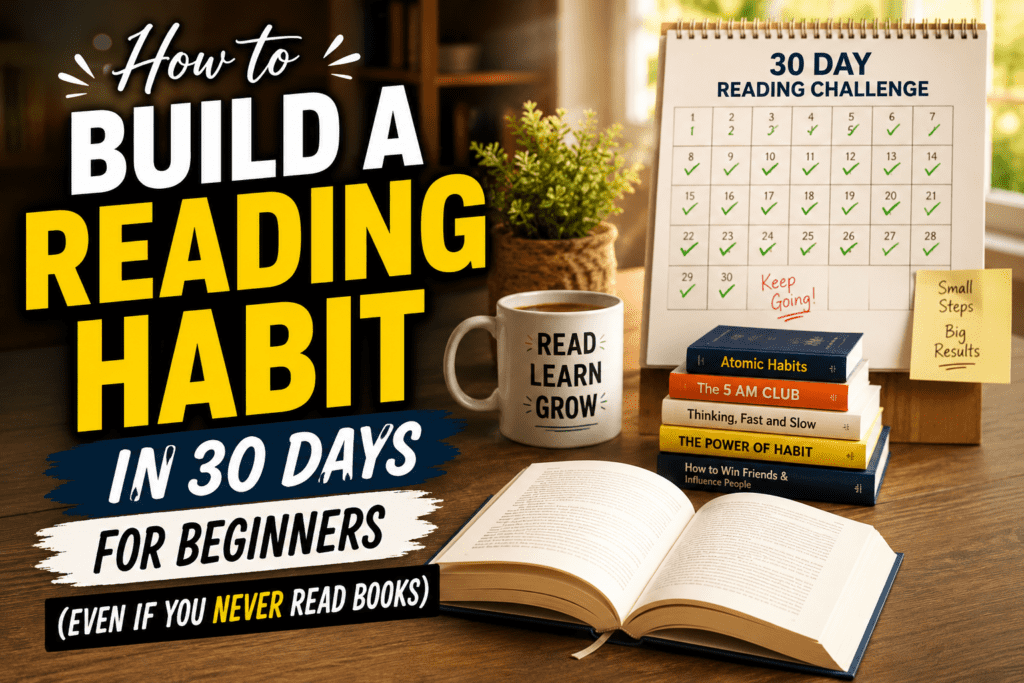
To make this plan even more effective, consider using a simple reading tracker. Marking each successful day creates a visual record of your progress and can motivate you to maintain your streak. The goal is not perfection but steady improvement over time.
A Real-Life Example of Building a Reading Habit
Consider Sarah, a busy office worker who hadn’t finished a book in years.
Like many people, she believed she didn’t have time to read.
Instead of forcing herself to read for an hour daily, she started with just five pages before bed.
During the first week, progress felt slow.
By the second week, reading became easier.
By the third week, she naturally increased her reading time to 20 minutes.
After 30 days, Sarah completed her first book and continued reading regularly.
One year later, she had finished 18 books.
What changed?
Not motivation.
Not willpower.
She simply built a small, sustainable habit.
This example highlights an important truth: success comes from consistency, not intensity.
Sarah also noticed unexpected benefits beyond reading more books. She felt less stressed before bed, spent less time on social media, and found it easier to focus during work. These secondary benefits reinforced her new habit and made reading something she genuinely looked forward to each day.
Common Mistakes to Avoid When Building a Reading Habit
Many beginners unknowingly sabotage their progress.
Avoid these common mistakes:
Choosing Books You Think You Should Read
Read what interests you.
Whether it’s self-improvement, biographies, business, fiction, or psychology, enjoyment matters.
Setting Unrealistic Goals
Reading 100 pages daily sounds impressive but often leads to burnout.
Start small.
Reading Without a Schedule
If reading doesn’t have a specific time, it usually doesn’t happen.
Schedule it.
Using Your Phone During Reading Sessions
Notifications destroy focus.
Place your phone in another room whenever possible.
Quitting After Missing a Day
Missing one day doesn’t matter.
Missing multiple days creates a new habit.
Never miss twice.
Another mistake is constantly switching between books before finishing them. While it’s okay to abandon a book you genuinely dislike, jumping from one book to another can make it difficult to build momentum. Focus on completing one book at a time whenever possible. Finishing books creates a sense of accomplishment and strengthens your identity as a reader.
Conclusion
Learning how to build a reading habit doesn’t require extraordinary discipline or endless free time.
It requires a simple system.
Start small.
Read books you genuinely enjoy.
Attach reading to an existing routine.
Focus on consistency rather than volume.
Over the next 30 days, your goal isn’t just to finish a book. Your goal is to become the type of person who reads regularly.
The rewards extend far beyond knowledge. Reading can improve focus, reduce stress, expand your perspective, and help you grow personally and professionally.
Start today.
Pick one book, commit to reading just five pages, and take the first step toward building a lifelong reading habit.
Frequently Asked Questions
1. How long does it take to build a reading habit?
While research varies, most people notice significant progress within 30 days when they read consistently.
2. What is the best time to read?
The best time is whenever you can be consistent. Many people prefer mornings or before bed.
3. How many pages should beginners read daily?
Start with 2-5 pages and gradually increase as reading becomes easier.
4. What type of books should beginners choose?
Choose books that genuinely interest you. Enjoyment increases consistency.
5. Can audiobooks help build a reading habit?
Yes. Audiobooks can complement traditional reading and help busy individuals consume more content.
