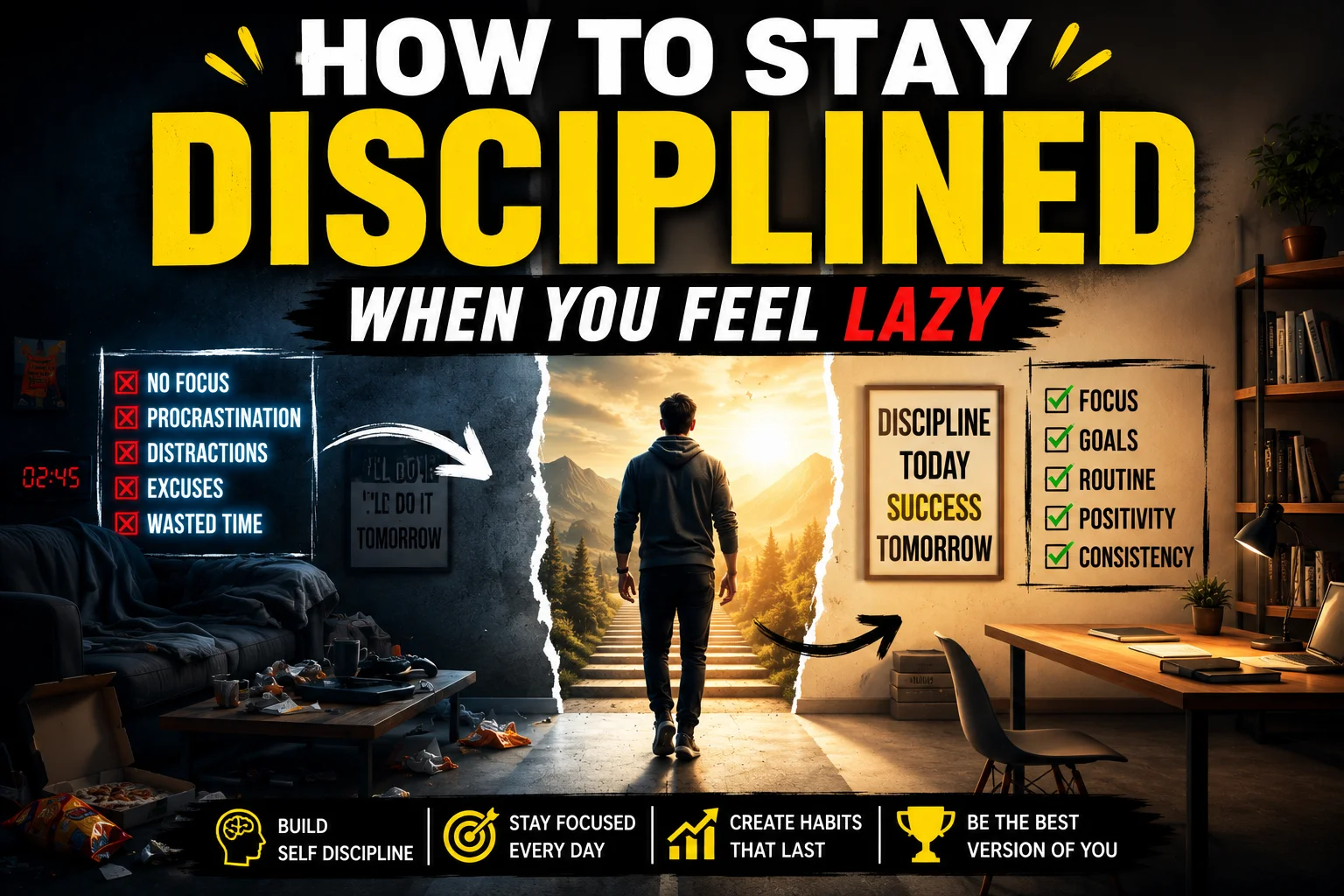
Learn how to stay disciplined when you feel lazy with proven self discipline habits, productivity tips, and daily routines to stay focused and consistent.
Everyone wants success, confidence, better habits, and a productive life. But the biggest challenge most people face is staying consistent when motivation disappears. One day you feel inspired and ready to conquer your goals. The next day you feel tired, distracted, lazy, and completely unmotivated.
If you constantly search for answers like:
- how to stay disciplined
- how to stop being lazy
- how to stay motivated daily
- how to stay focused
- how to be more productive
- discipline over motivation
Then you are not alone.
Millions of people struggle with procrastination, lack of focus, and inconsistency every day. According to research published by the American Psychological Association, nearly 20% of adults identify as chronic procrastinators. Another study from Frontiers in Psychology found that self-discipline predicts long-term success more effectively than motivation alone.
The truth is simple: motivation comes and goes, but discipline creates real transformation.
Learning how to stay disciplined when you feel lazy can completely change your life. It can improve your productivity, mental focus, fitness goals, career growth, study habits, and personal development.
In this detailed guide, you will learn:
- how to build self discipline
- how to stop procrastinating
- productivity habits that actually work
- how disciplined people think
- daily routines for success
- practical strategies to stay focused even without motivation
By the end of this article, you will have a complete roadmap for becoming more disciplined and productive in your daily life.
Why Motivation Fails and Self Discipline Wins
Most people believe motivation is the secret to success. They watch motivational videos, read quotes, and wait to “feel ready” before taking action.
The problem is that motivation is temporary.
Some days you feel energetic and focused. Other days you feel mentally exhausted and lazy. If your success depends only on motivation, your results will always be inconsistent.
That’s why self discipline matters more.
What Is Self Discipline?
Self discipline is the ability to take action even when you do not feel like it.
It means:
- controlling distractions
- resisting procrastination
- staying focused on long-term goals
- maintaining productive habits
- following routines consistently
People who master discipline do not rely on emotions. They rely on systems and habits.
Why Motivation Disappears Quickly
Motivation is emotional. Emotions constantly change.
For example:
- You feel inspired after watching a productivity video.
- You create big goals.
- You work hard for two days.
- Then laziness appears.
- You lose focus and quit.
This cycle repeats endlessly for most people.
Research from the University of Scranton revealed that only 8% of people achieve their New Year’s resolutions. One major reason is that people rely too much on motivation instead of building discipline and consistency.
Discipline Creates Long-Term Success
Self discipline helps you:
- stay productive
- improve mental strength
- achieve fitness goals
- build confidence
- avoid distractions
- create healthy routines
The most successful people in the world are not always motivated. They simply learn how to keep going when motivation disappears.
That is the real secret.
Why You Feel Lazy and Unmotivated
Before learning how to stay disciplined, you must understand why laziness happens.
Most people are not truly lazy. They are mentally overwhelmed, distracted, exhausted, or unclear about their goals.
1. Too Many Digital Distractions
Social media, gaming, notifications, and entertainment overload destroy concentration.
Studies show the average person spends over 2.5 hours daily on social media platforms. Constant dopamine stimulation makes normal work feel boring and difficult.
This is why many people struggle with:
- focus
- productivity
- mental clarity
- consistency
2. Lack of Clear Goals
When goals are vague, the brain avoids effort.
Instead of saying:
“I want success.”
Say:
“I will write 1000 words every morning.”
Specific goals create direction and improve productivity.
3. Mental Exhaustion
Burnout makes discipline difficult.
Poor sleep, stress, anxiety, and overthinking reduce energy levels and motivation.
According to the CDC, adults need at least 7 hours of quality sleep for better cognitive performance and focus.
4. Fear of Failure
Many people procrastinate because they fear making mistakes.
Perfectionism often hides behind laziness.
You delay action because you fear:
- criticism
- failure
- rejection
- imperfection
5. No Daily Routine
Without structure, your brain depends on emotions to decide what to do.
That usually leads to:
- procrastination
- laziness
- inconsistency
- poor productivity
A strong routine removes unnecessary decisions and improves discipline naturally.
How To Stay Disciplined Every Day
Now let’s discuss practical strategies that actually work.
These methods can help you stay disciplined even when you feel lazy and unmotivated.
1. Start With Small Habits
Most people fail because they try to change their entire life overnight.
Instead:
- start small
- focus on consistency
- improve gradually
For example:
Instead of:
“I will study for 5 hours daily.”
Start with:
“I will study for 20 minutes daily.”
Small wins create momentum.
2. Use the 5-Minute Rule
When you feel lazy, commit to working for only five minutes.
Usually, starting is the hardest part.
Once momentum builds, continuing becomes easier.
This productivity technique reduces mental resistance and helps overcome procrastination.
3. Remove Distractions
Your environment shapes your behavior.
If distractions surround you, staying disciplined becomes extremely difficult.
To improve focus:
- silence notifications
- keep your phone away
- use website blockers
- organize your workspace
- avoid multitasking
Successful people protect their focus aggressively.
4. Build a Productive Morning Routine
Morning routines improve discipline and mental clarity.
A productive routine may include:
- Wake up early
- Drink water
- Exercise
- Journal your goals
- Avoid social media
- Start important work immediately
Morning habits often determine your productivity for the entire day.
5. Focus on Identity Instead of Motivation
Instead of saying:
“I want to become disciplined.”
Say:
“I am a disciplined person.”
Identity-based habits are powerful because people naturally act according to who they believe they are.
Daily Habits of Disciplined People
People with strong self discipline follow habits consistently.
These habits improve focus, productivity, and mental strength.
Exercise Regularly
Exercise improves:
- energy
- focus
- confidence
- mental health
- productivity
Even a 20-minute walk can increase motivation and reduce stress.
Practice Delayed Gratification
Disciplined people sacrifice short-term pleasure for long-term success.
Examples include:
- studying before entertainment
- working before scrolling social media
- saving money instead of impulse shopping
The famous Stanford Marshmallow Experiment showed that delayed gratification strongly predicts future achievement and success.
Track Your Progress
Tracking habits increases accountability.
You can use:
- journals
- habit trackers
- productivity apps
- calendars
Tracking creates awareness and motivation.
Follow the “No Zero Days” Rule
Never let a day pass without making progress.
Even small actions matter.
Examples:
- write one paragraph
- read one page
- do ten push-ups
- meditate for five minutes
Consistency beats perfection.
Protect Your Mental Energy
Mental exhaustion destroys discipline.
To improve mental clarity:
- sleep properly
- take breaks
- reduce social media usage
- avoid toxic environments
- practice mindfulness
Healthy mental habits improve productivity dramatically.
Real-Life Example: How Self Discipline Changed a Life
Case Study: Michael’s Productivity Transformation
Michael was a 25-year-old student struggling with procrastination, gaming addiction, and lack of motivation.
He constantly searched:
- how to stay disciplined
- how to stop procrastinating
- how to stay focused while studying
But nothing changed because he relied only on motivation.
Eventually, he decided to focus on systems instead of feelings.
Here’s what he changed:
- deleted distracting apps
- followed a morning routine
- exercised four times weekly
- used a habit tracker
- studied in focused 25-minute sessions
- reduced screen time significantly
At first, progress felt slow.
But after three months:
- his productivity improved
- his grades increased
- his confidence grew
- he felt mentally stronger
- procrastination reduced dramatically
The biggest lesson?
Discipline grows through daily habits, not temporary inspiration.
Small consistent actions changed his entire lifestyle.
How To Stay Disciplined Long-Term
Building discipline for a few days is easy.
Maintaining discipline for months and years is what creates extraordinary results.
Stop Waiting for Perfect Conditions
There will never be a perfect time to start.
You must learn to take action despite:
- fear
- stress
- tiredness
- uncertainty
- laziness
Action creates momentum.
Accept Imperfection
Nobody stays productive every single day.
Missing one day does not destroy progress.
The goal is consistency, not perfection.
Never let one bad day become a bad week.
Use Accountability
Accountability increases commitment.
Tell someone your goals or join a productivity community.
People are more likely to stay disciplined when others expect progress from them.
Reward Yourself
Rewards help maintain consistency.
Examples:
- enjoy entertainment after completing work
- celebrate milestones
- take healthy breaks
- reward productive habits
Positive reinforcement strengthens discipline.
Remember Your “Why”
Your reasons must be stronger than your excuses.
Ask yourself:
- Why do I want success?
- Why do I want self discipline?
- What happens if I never change?
Strong emotional reasons help you stay consistent during difficult moments.
Conclusion
Learning how to stay disciplined when you feel lazy can completely transform your life.
Motivation fades quickly, but self discipline creates long-term success.
The good news is that discipline is not a talent you are born with. It is a skill you build through small consistent habits repeated daily.
Remember these key lessons:
- start small
- remove distractions
- build routines
- focus on consistency
- stop waiting for motivation
- track your progress
- develop productive habits
You do not need to feel motivated every day.
You simply need to continue taking action.
Every small step matters.
The disciplined version of yourself already exists. Your daily habits decide whether that person becomes reality.
Frequently Asked Questions
1. How can I stay disciplined when I feel lazy?
Focus on small actions, remove distractions, and build daily routines. Discipline becomes easier when habits become automatic.
2. What is the fastest way to build self discipline?
Start with one small habit and repeat it consistently every day. Consistency matters more than intensity.
3. Why do I lose motivation so quickly?
Motivation is emotional and temporary. Self discipline and routines create long-term consistency.
4. How do I stop procrastinating and focus?
Reduce distractions, break tasks into smaller steps, and use productivity methods like the 5-minute rule.
5. Can discipline improve productivity?
Yes. Self discipline helps improve focus, time management, consistency, and overall productivity.
